
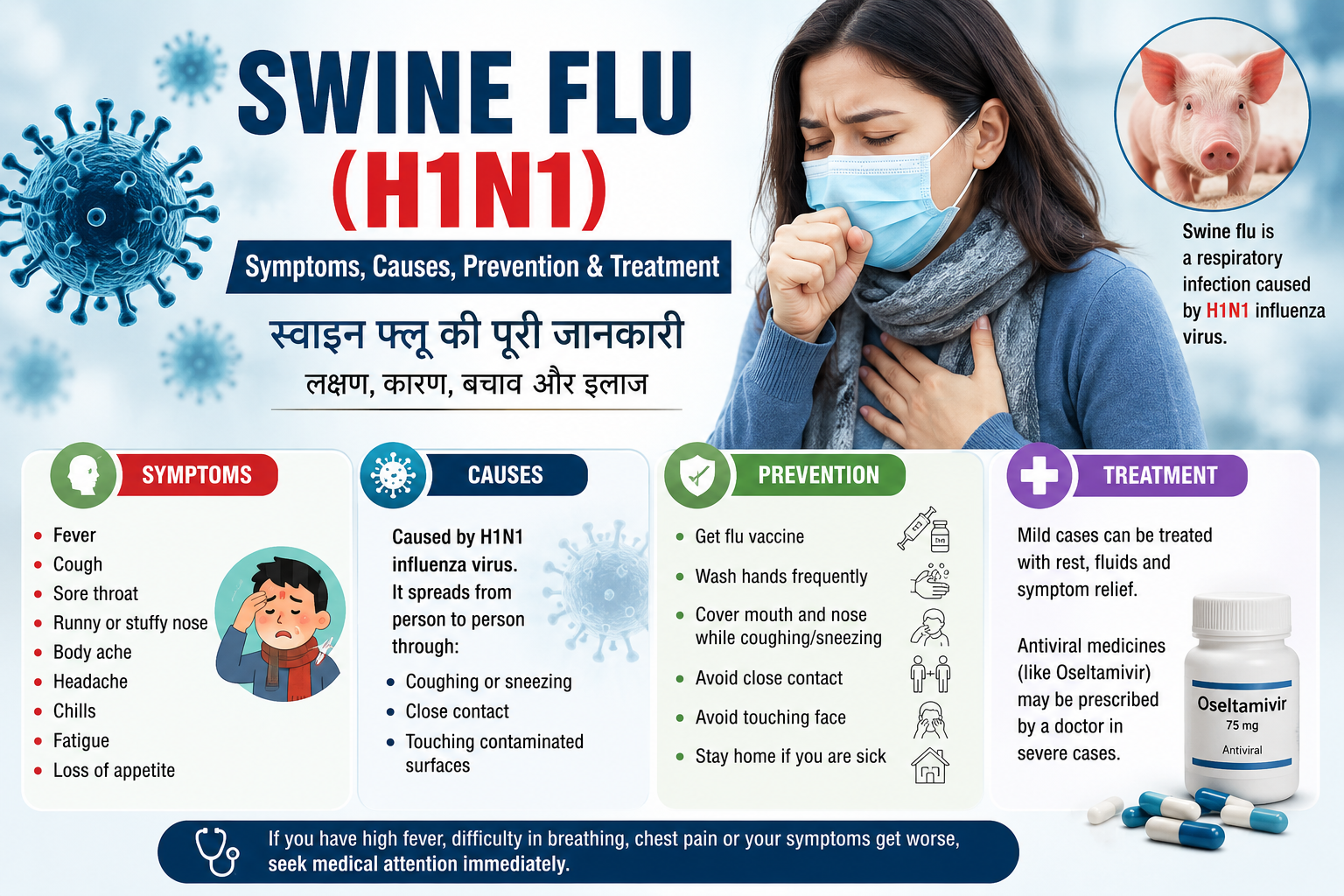
स्वाइन फ्लू (H1N1): लक्षण, कारण, बचाव, जांच और इलाज की पूरी जानकारी
Introduction | परिचय
Swine flu is a respiratory infection associated with Influenza A viruses, particularly the H1N1 strain. The term “swine flu” became widely known during the 2009 H1N1 pandemic. Today, H1N1 continues to circulate among humans as one of the seasonal influenza viruses, so the term “swine flu” can sometimes be misleading.
स्वाइन फ्लू एक संक्रामक श्वसन रोग है, जो Influenza virus के कारण होता है। H1N1 इसका एक प्रमुख प्रकार है। 2009 की महामारी के दौरान H1N1 को आम तौर पर “Swine Flu” कहा गया था। वर्तमान में H1N1 मानवों में seasonal influenza virus के रूप में फैलता रहता है।
Influenza can range from a mild illness to severe pneumonia, respiratory failure, sepsis and other complications, particularly in people at higher risk.
What Causes Swine Flu? | स्वाइन फ्लू क्यों होता है?
Swine flu is caused by influenza viruses. Human influenza spreads mainly from an infected person to another person through respiratory droplets and particles released during coughing, sneezing or talking. It can also spread through contaminated hands and surfaces when a person subsequently touches their eyes, nose or mouth.
मुख्य कारण:
- Influenza A/H1N1 virus infection
- संक्रमित व्यक्ति के संपर्क में आना
- खांसने या छींकने से निकलने वाली respiratory droplets
- संक्रमित हाथों से आंख, नाक या मुंह छूना
- भीड़भाड़ या बंद स्थानों में लंबे समय तक रहना
- संक्रमित व्यक्ति के बहुत करीब रहना
The incubation period is generally about 1–4 days, and symptoms commonly begin around two days after infection.
Symptoms of Swine Flu | स्वाइन फ्लू के लक्षण
Swine flu symptoms can appear suddenly and may resemble other respiratory viral infections.
Common symptoms | सामान्य लक्षण
- Fever — बुखार
- Dry cough — सूखी खांसी
- Sore throat — गले में खराश या दर्द
- Runny or blocked nose — नाक बहना या बंद होना
- Headache — सिरदर्द
- Body and muscle aches — शरीर और मांसपेशियों में दर्द
- Extreme tiredness — बहुत अधिक कमजोरी या थकान
- Chills — ठंड लगना
- Loss of appetite — भूख कम लगना
Some patients may also experience nausea, vomiting or diarrhea, particularly children.
खांसी कभी-कभी काफी समय तक बनी रह सकती है। WHO के अनुसार, influenza में fever और अन्य symptoms अक्सर लगभग एक सप्ताह में बेहतर हो जाते हैं, हालांकि cough दो सप्ताह या उससे अधिक समय तक रह सकती है।
Severe Symptoms | गंभीर लक्षण
Influenza can occasionally become severe and may cause pneumonia, respiratory failure or sepsis.
Seek urgent medical attention if there is:
- Difficulty in breathing
- Chest pain or pressure
- Bluish lips or face
- Severe weakness or confusion
- Persistent or worsening fever
- Low oxygen saturation
- Severe dehydration
- Drowsiness or altered consciousness
- Symptoms that initially improve and then suddenly become worse
सांस लेने में परेशानी, सीने में दर्द, ऑक्सीजन कम होना, अत्यधिक कमजोरी, confusion या हालत तेजी से बिगड़ना गंभीर warning signs हैं। ऐसे मामलों में तुरंत medical evaluation आवश्यक है।
Who Is at Higher Risk? | किन लोगों को अधिक खतरा है?
Although anyone can develop influenza, complications are more likely in certain groups.
Higher-risk groups include:
- Pregnant women
- Young children
- Adults aged 65 years or older
- People with diabetes
- People with chronic heart disease
- People with chronic lung disease such as COPD or asthma
- People with chronic kidney disease
- People with weakened immune systems
- People receiving chemotherapy or immunosuppressive treatment
WHO specifically identifies pregnant women, young children, older adults and people with chronic medical conditions as groups at increased risk of severe influenza complications.
Diagnosis | स्वाइन फ्लू की जांच
A doctor may initially diagnose influenza based on symptoms and clinical examination. However, influenza symptoms can overlap with COVID-19 and other respiratory infections.
Laboratory confirmation may involve respiratory samples and tests such as:
- Rapid influenza diagnostic tests
- Molecular tests
- RT-PCR
RT-PCR and other molecular tests can provide laboratory confirmation of influenza infection.
Important: Every person with fever and cough does not necessarily have H1N1. Testing should be decided according to symptoms, risk factors and medical assessment.
Treatment of Swine Flu | स्वाइन फ्लू का इलाज
Treatment depends on the severity of illness and the patient’s risk factors.
1. Supportive treatment | सामान्य उपचार
For mild illness, treatment commonly includes:
- Adequate rest
- Plenty of fluids
- Fever management
- Nutritious food
- Staying at home while unwell
- Avoiding close contact with others
Most otherwise healthy people recover without specific antiviral treatment.
2. Antiviral medicines | एंटीवायरल दवाएं
Influenza-specific antiviral medicines are prescription medicines. One commonly used antiviral is oseltamivir. Other antivirals may also be used depending on clinical circumstances and local guidelines.
Antivirals work best when started within 1–2 days after symptoms begin, although patients with severe illness or those at high risk may still benefit from treatment started later.
Oseltamivir should not be self-started without medical advice. The appropriate dose and duration depend on factors such as age, weight, kidney function, pregnancy and severity of illness.
3. Antibiotics | एंटीबायोटिक्स
Antibiotics do not treat influenza viruses. They may be prescribed only when a doctor suspects or confirms a bacterial infection, such as secondary bacterial pneumonia.
Therefore, taking antibiotics unnecessarily for every case of fever and flu is not recommended.
Prevention of Swine Flu | स्वाइन फ्लू से बचाव
1. Annual influenza vaccination
Vaccination is one of the most effective ways to prevent influenza and reduce the risk of severe disease. WHO recommends annual influenza vaccination, particularly for people at higher risk of complications.
Vaccination is especially important for:
- Pregnant women
- Young children
- Older adults
- People with chronic diseases
- Healthcare workers
2. Wash your hands
Wash hands regularly with soap and water or use an alcohol-based hand rub.
हाथों को बार-बार धोना infection transmission को कम करने में मदद करता है।
3. Cover coughs and sneezes
Cover your mouth and nose with a tissue or your elbow when coughing or sneezing. Dispose of used tissues properly.
4. Avoid close contact
Stay away from people who are sick and avoid close contact with others when you have influenza symptoms.
5. Avoid touching your face
Avoid unnecessary touching of your eyes, nose and mouth with unwashed hands.
6. Stay home when sick
If you have fever, cough and other flu symptoms, staying home and limiting contact with others helps reduce transmission.
Swine Flu and Pregnancy | गर्भावस्था में स्वाइन फ्लू
Pregnant women are at increased risk of complications from influenza. Therefore, influenza-like symptoms during pregnancy should not be ignored.
Pregnant women with suspected influenza should contact their healthcare provider promptly because antiviral treatment may be recommended, particularly when symptoms are significant or the patient is at increased risk.
Swine Flu in Children | बच्चों में स्वाइन फ्लू
Children can develop influenza with fever, cough, sore throat, weakness and other respiratory symptoms. Some children may develop vomiting or diarrhea.
Parents should seek medical attention if a child has:
- Difficulty breathing
- Persistent high fever
- Poor fluid intake
- Signs of dehydration
- Extreme sleepiness
- Confusion
- Bluish discoloration
- Rapid worsening of symptoms
When Should You See a Doctor? | डॉक्टर से कब संपर्क करें?
You should seek medical advice if:
- Fever is persistent or severe
- Breathing becomes difficult
- Oxygen saturation is low
- Symptoms are getting worse
- There is chest pain
- You have diabetes, heart disease, COPD, kidney disease or another chronic illness
- You are pregnant
- The patient is a young child or older adult
- Symptoms improve and then suddenly worsen
Early assessment is particularly important for people at high risk of complications.
Conclusion | निष्कर्ष
Swine flu, commonly associated with H1N1 influenza, is a contagious respiratory infection. Its symptoms can range from fever, cough and body aches to serious complications such as pneumonia and respiratory failure.
The best approach is prevention, early recognition and appropriate medical treatment. Annual influenza vaccination, hand hygiene, respiratory hygiene, avoiding close contact with sick people and staying home when ill can help reduce transmission.
For people at high risk or those with severe symptoms, early medical evaluation is important. Antiviral medicines such as oseltamivir may be prescribed by a healthcare professional and generally work best when started early. Antibiotics should not be used routinely because influenza is caused by a virus, not bacteria.
यह ब्लॉग सामान्य स्वास्थ्य जानकारी के लिए है। स्वाइन फ्लू की पुष्टि, antiviral की जरूरत, dosage और treatment का निर्णय डॉक्टर द्वारा patient की उम्र, pregnancy status, kidney function, अन्य diseases और symptoms की severity के आधार पर किया जाना चाहिए।