
Introduction
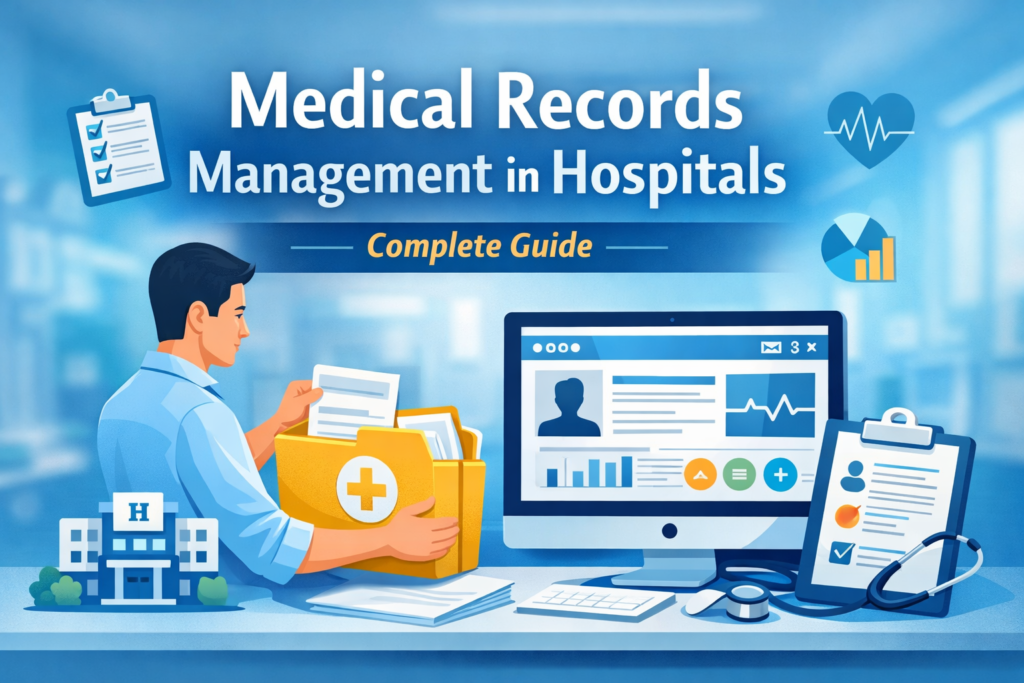
Medical Records Management is one of the most important systems in any hospital or healthcare organization. It involves the systematic creation, maintenance, storage, and retrieval of patient health information. Proper management of medical records ensures that patient information is accurate, secure, and easily available for healthcare professionals whenever needed.
In modern healthcare systems, medical records play a critical role in patient treatment, hospital administration, legal protection, and quality improvement. Hospitals must maintain well-organized medical records to provide safe and effective healthcare services.
In India, hospitals that aim to follow quality healthcare standards must maintain proper documentation as recommended by the National Accreditation Board for Hospitals & Healthcare Providers (NABH). Effective medical records management helps hospitals meet these standards and improve overall healthcare quality.
This guide explains the meaning, importance, components, and best practices of medical records management in hospitals.
What is Medical Records Management?
Medical Records Management refers to the process of collecting, organizing, maintaining, and protecting patient health information in a systematic manner. It includes all documents related to a patient’s medical history, diagnosis, treatment, laboratory results, medications, and discharge details.
These records are maintained by the Medical Record Department (MRD) in hospitals. The department ensures that all patient records are properly documented, stored safely, and easily accessible when required.
Medical records can be maintained in two main formats:
Paper-based medical records – Traditional files that contain printed or handwritten patient information.
Electronic medical records (EMR) – Digital records stored in hospital information systems.
Both systems aim to maintain complete and accurate information about patient care.
Importance of Medical Records Management in Hospitals
Medical records management is essential for efficient hospital operations and quality patient care. Proper documentation ensures that healthcare providers have access to accurate information while treating patients.
One of the most important benefits of medical records management is continuity of care. When patient information is properly documented, doctors and nurses can review previous treatments, diagnoses, and medications before making clinical decisions.
Medical records also support communication between healthcare professionals. Many patients receive treatment from multiple specialists, and proper documentation helps each healthcare provider understand the patient’s medical history.
Another major benefit is legal protection. Medical records act as legal documents in case of disputes, complaints, or medico-legal cases. Accurate documentation can protect hospitals and healthcare professionals by providing evidence of the care provided to patients.
Medical records are also useful for hospital administration and research. Hospitals analyze medical records to evaluate treatment outcomes, identify disease patterns, and improve healthcare services.
In addition, proper documentation is required for hospital accreditation programs, including NABH standards. Hospitals seeking accreditation must demonstrate that they maintain complete and organized medical records.
Components of a Medical Record
A patient’s medical record contains several documents that provide detailed information about their health condition and treatment. Some of the key components include:
Patient identification information
This includes the patient’s name, age, gender, address, contact details, and hospital registration number.
Medical history
Medical history records previous illnesses, surgeries, allergies, and family medical history. This information helps doctors understand the patient’s health background.
Admission notes
Admission notes document the patient’s condition at the time of hospital admission. They include symptoms, initial diagnosis, and treatment plans.
Clinical progress notes
These notes record the patient’s progress during hospitalization. Doctors and nurses update these notes regularly to track treatment response.
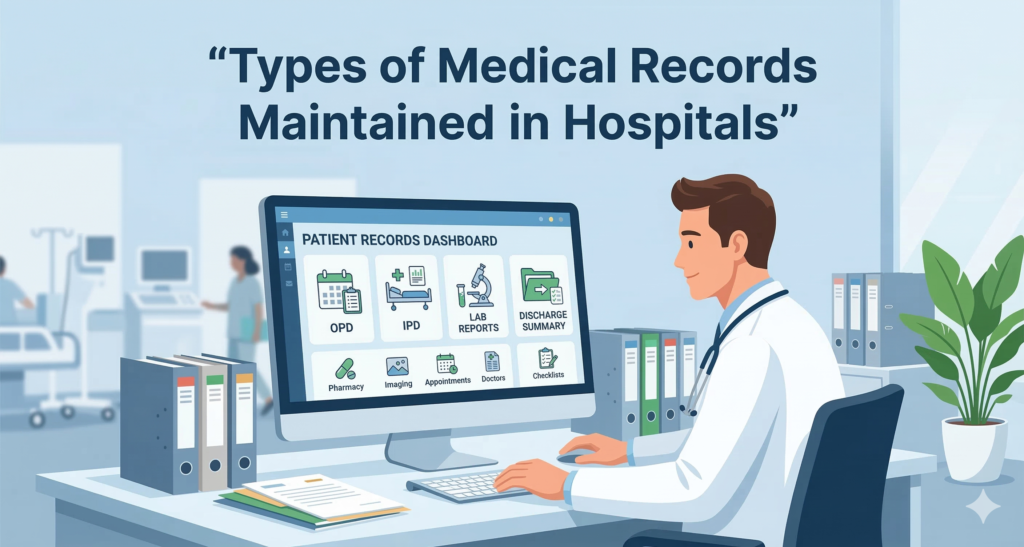
Investigation reports
Laboratory tests, imaging reports, and diagnostic results are part of the medical record. These reports help doctors confirm diagnoses and monitor treatment effectiveness.
Medication records
Medication charts contain information about prescribed drugs, dosage, and administration time.
Nursing records
Nursing notes document patient care activities such as monitoring vital signs, administering medications, and observing patient conditions.
Consent forms
Hospitals obtain written consent from patients before performing procedures, surgeries, or treatments.
Discharge summary
The discharge summary provides a complete overview of the patient’s hospital stay, diagnosis, treatment provided, and instructions for follow-up care.
Role of the Medical Record Department (MRD)
The Medical Record Department is responsible for managing patient records within a hospital. It ensures that medical records are properly created, organized, and maintained.
The department performs several important functions. These include registering patients, creating medical record files, maintaining patient indexes, and ensuring proper storage of records. MRD staff also retrieve medical records when doctors or hospital departments require them.
Another important responsibility of MRD is medical record coding and indexing. Coding helps classify diseases and treatments according to standardized medical classification systems.
The MRD also ensures confidentiality of patient information. Medical records contain sensitive information, and hospitals must protect patient privacy according to ethical and legal guidelines.
In addition, the department plays a key role in medical record audits and hospital accreditation processes.
Types of Medical Records Systems
Hospitals generally use two types of medical records systems.
The first is the paper-based medical record system. In this system, patient information is recorded in physical files and stored in record rooms. Although this method has been used for many years, it requires large storage space and manual retrieval.
The second system is the Electronic Medical Record (EMR) system. In this digital system, patient information is stored electronically in hospital computer systems. Electronic records allow faster access, easier data sharing, and better security.
Many modern hospitals are now adopting digital record management systems to improve efficiency and reduce paperwork.
Challenges in Medical Records Management
Despite its importance, hospitals often face several challenges in maintaining medical records.
One common challenge is incomplete documentation. Healthcare professionals may forget to record certain information due to busy work schedules.
Another issue is poor record organization. If files are not properly arranged, it becomes difficult to retrieve them quickly when needed.
Storage is also a major challenge for hospitals that maintain paper records. Large hospitals generate thousands of patient files every year, requiring significant storage space.
Additionally, hospitals must ensure data security and protect patient confidentiality, especially when using electronic record systems.
Best Practices for Effective Medical Records Management
Hospitals can improve their medical records management systems by following several best practices.
First, healthcare professionals should ensure that documentation is clear, accurate, and complete. Every clinical activity must be recorded properly.
Second, hospitals should maintain standardized documentation formats. Using standardized forms helps ensure consistency across departments.
Third, hospitals should implement regular training programs for healthcare staff. Training helps staff understand the importance of proper documentation.
Fourth, hospitals should conduct regular medical record audits to identify documentation errors and improve record quality.
Finally, healthcare organizations should adopt digital record management systems whenever possible. Electronic records improve efficiency, reduce storage issues, and enhance data security.
Conclusion
Medical Records Management is a fundamental component of hospital operations and patient care. Proper management of medical records ensures accurate documentation, supports clinical decision-making, and improves communication among healthcare professionals.
Well-maintained medical records also help hospitals meet legal requirements, support research activities, and achieve accreditation standards such as NABH.
By implementing effective documentation practices and modern record management systems, hospitals can enhance healthcare quality, improve patient safety, and ensure better healthcare outcomes.
In today’s healthcare environment, efficient medical records management is not just an administrative requirement—it is a critical element of delivering high-quality patient care.
Frequently Asked Questions (FAQs)
1. What is medical records management in hospitals?
Medical records management is the process of creating, organizing, storing, and maintaining patient health information in a hospital. It ensures that patient records are accurate, secure, and easily accessible for doctors, nurses, and healthcare staff.
2. Why are medical records important in hospitals?
Medical records are important because they provide complete information about a patient’s medical history, diagnosis, treatment, and medications. Proper records help doctors make better clinical decisions and improve patient care.
3. What are the main components of a medical record?
A hospital medical record usually includes:
- Patient identification details
- Medical history
- Admission notes
- Clinical progress notes
- Laboratory and investigation reports
- Medication records
- Nursing notes
- Discharge summary
4. What is the role of the Medical Record Department (MRD)?
The Medical Record Department is responsible for maintaining, storing, indexing, and retrieving patient records. It also ensures the confidentiality of medical records and supports hospital audits and documentation systems.
5. What is the difference between EMR and EHR?
Electronic Medical Records (EMR) are digital versions of patient records used within a hospital, while Electronic Health Records (EHR) can be shared across different healthcare organizations to provide a complete view of patient health.
6. How long should hospitals keep medical records?
The retention period for medical records varies depending on hospital policies and legal regulations. Hospitals following **National Accreditation Board for Hospitals & Healthcare Providers standards usually maintain records for several years to ensure compliance and legal safety.
7. How do hospitals protect patient confidentiality?
Hospitals protect patient confidentiality by implementing secure storage systems, restricted access policies, and staff training programs. Electronic records are also protected using passwords and data security systems.
8. What are the benefits of electronic medical records?
Electronic medical records provide several benefits such as:
- Faster access to patient information
- Improved data accuracy
- Better communication among healthcare providers
- Reduced paperwork and storage space
9. What are common problems in medical records management?
Some common challenges include incomplete documentation, poor file organization, delayed record updates, and lack of staff training. Hospitals can overcome these issues through proper systems and regular audits.
10. How does medical records management support hospital accreditation?
Proper medical records management helps hospitals meet accreditation requirements by maintaining standardized documentation, accurate patient records, and quality monitoring systems, which are essential for hospital quality standards.
Author
Mr. Naveen Kumar Prajapati is a healthcare documentation professional with more than 10 years of experience working in a NABH accredited hospital. He has extensive knowledge in Medical Records Management, hospital documentation systems, quality indicators, and NABH standards. Through his work in the Medical Record Department (MRD), he has gained practical experience in maintaining patient records, hospital audits, and accreditation documentation.
Through his website Medicorecords.com, he shares practical knowledge, guidelines, and educational resources related to medical records management, NABH documentation, and hospital quality systems to help healthcare professionals and students understand hospital documentation practices more effectively.

Pingback: Complete Guide to NABH Documentation for Hospitals Complete Guide to NABH Documentation for Hospitals (Easy & Practical)Complete Guide to NABH Documentation for Hospitals - medicorecords.com