
Introduction
The National Accreditation Board for Hospitals & Healthcare Providers (NABH) is a constituent board of Quality Council of India (QCI) that sets benchmarks for healthcare quality and patient safety. NABH accreditation is essential for hospitals aiming to improve clinical outcomes, patient trust, and operational efficiency.
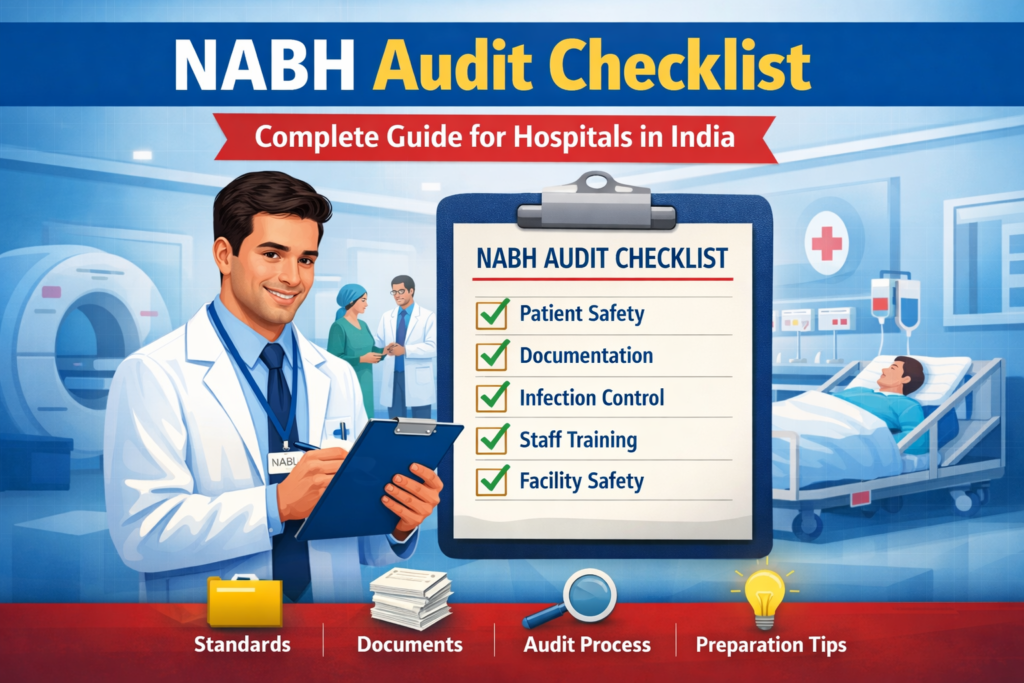
One of the most critical components of NABH accreditation is the audit process, which evaluates whether a hospital meets defined standards. A well-prepared NABH audit checklist helps hospitals systematically assess their readiness and avoid last-minute compliance gaps.
In this article, we will explore a detailed NABH audit checklist, its components, and how hospitals can effectively prepare for audits
What is NABH Audit?
An NABH audit is a structured evaluation conducted to ensure that a hospital complies with NABH standards. These audits can be:
- Internal audits (conducted by hospital staff)
- External audits (conducted by NABH assessors)
The audit focuses on patient safety, quality care, documentation, infection control, and administrative efficiency.
Importance of NABH Audit Checklist
A checklist ensures:
- Standardized audit preparation
- Identification of compliance gaps
- Improved patient safety
- Better documentation practices
- Smooth NABH certification process
Without a checklist, hospitals may overlook critical compliance areas.
Key Areas of NABH Audit Checklist
1. Patient Rights and Education (PRE)
Checklist Points:
- Patients are informed about their rights and responsibilities
- Consent forms are properly signed and documented
- Privacy and confidentiality are maintained
- Patient education materials are available
2. Access, Assessment and Continuity of Care (AAC)
Checklist Points:
- Proper patient registration process
- Initial assessment done within defined time
- Continuity of care maintained across departments
- Discharge planning is documented
3. Care of Patients (COP)
Checklist Points:
- Treatment protocols are followed
- Medication administration is safe
- Monitoring of patient condition is documented
- Emergency services are well-managed
4. Management of Medication (MOM)
Checklist Points:
- Proper storage of medicines
- High-risk medications are identified
- Prescription errors are minimized
- Drug expiry tracking system in place
5. Hospital Infection Control (HIC)
Checklist Points:
- Hand hygiene compliance
- Biomedical waste management
- Sterilization and disinfection protocols
- Infection surveillance system
6. Continuous Quality Improvement (CQI)
Checklist Points:
- Key Performance Indicators (KPIs) monitored
- Patient feedback system in place
- Incident reporting mechanism
- Regular quality audits conducted
7. Responsibilities of Management (ROM)
Checklist Points:
- Organizational structure defined
- Policies and procedures documented
- Staff training programs conducted
- Resource management effective
8. Facility Management and Safety (FMS)
Checklist Points:
- Fire safety systems installed
- Equipment maintenance records available
- Emergency preparedness plan
- Electrical and water safety checks
9. Human Resource Management (HRM)
Checklist Points:
- Staff credentials verified
- Training and competency records maintained
- Duty rosters available
- Performance evaluation system
10. Information Management System (IMS)
Checklist Points:
- Medical records are complete and accurate
- Confidentiality maintained
- Data backup system available
- Electronic Medical Records (EMR) properly managed
NABH Documentation Checklist
Documentation is the backbone of NABH audits. Ensure:
- SOPs (Standard Operating Procedures) are updated
- Policies are approved and signed
- Medical records are complete
- Audit reports are maintained
- Training records are documented
Internal Audit Preparation Tips
1. Conduct Mock Audits
Simulate real NABH audits to identify gaps.
2. Train Staff Regularly
Ensure all departments understand NABH standards.
3. Maintain Proper Documentation
Keep records updated and easily accessible.
4. Focus on Patient Safety
Patient-centric care is the core of NABH.
5. Continuous Monitoring
Regularly track compliance indicators.
Common Mistakes to Avoid
- Incomplete documentation
- Lack of staff awareness
- Poor infection control practices
- Missing consent forms
- عدم proper medication management
Avoiding these mistakes increases chances of successful accreditation.
Benefits of NABH Accreditation
- Improved patient trust
- Better hospital reputation
- Standardized processes
- Enhanced patient safety
- Eligibility for insurance empanelment
Conclusion
An NABH audit checklist is a powerful tool that ensures hospitals meet quality and safety standards. Proper planning, documentation, and staff training are essential for successful NABH accreditation.
Hospitals should adopt a proactive approach and conduct regular internal audits to stay compliant and deliver high-quality healthcare services.
FAQs on NABH Audit Checklist
1. What is the NABH audit checklist?
The NABH audit checklist is a structured list of standards and requirements used to assess hospital compliance with NABH guidelines.
2. How often should hospitals conduct NABH audits?
Hospitals should conduct internal audits at least quarterly, while external audits depend on accreditation cycles.
3. What documents are required for NABH audit?
Key documents include SOPs, policies, patient records, consent forms, audit reports, and training records.
4. Who conducts NABH audits?
Internal audits are conducted by hospital teams, while external audits are conducted by NABH-certified assessors.
5. How can hospitals prepare for NABH audit?
Hospitals should follow a checklist, conduct mock audits, train staff, and maintain proper documentation.
6. What are the main NABH standards?
Major standards include PRE, AAC, COP, MOM, HIC, CQI, ROM, FMS, HRM, and IMS.
7. Why is NABH accreditation important?
It improves healthcare quality, ensures patient safety, and enhances hospital credibility.
Written By: Naveen Prajapati
Medical Records Officer with expertise in NABH standards, hospital documentation, and healthcare quality management. Currently pursuing Business Analytics with a focus on data-driven healthcare improvement.

Pingback: EMR Implementation Guide: Step-by-Step Process for Successful Adoption EMR Implementation Guide: Step-by-Step Process for Hospitals (2026)EMR Implementation Guide: Step-by-Step Process for Successful Adoption - medicorecords.com