Introduction
Medical Records Department (MRD) plays a crucial role in maintaining accurate and complete patient records in hospitals. A proper MRD audit ensures compliance with standards like NABH, improves documentation quality, and enhances patient care.
In this guide, we will cover the complete MRD audit checklist, types of audits, common mistakes, and best practices for hospitals in 2026.
🏥 What is MRD Audit?
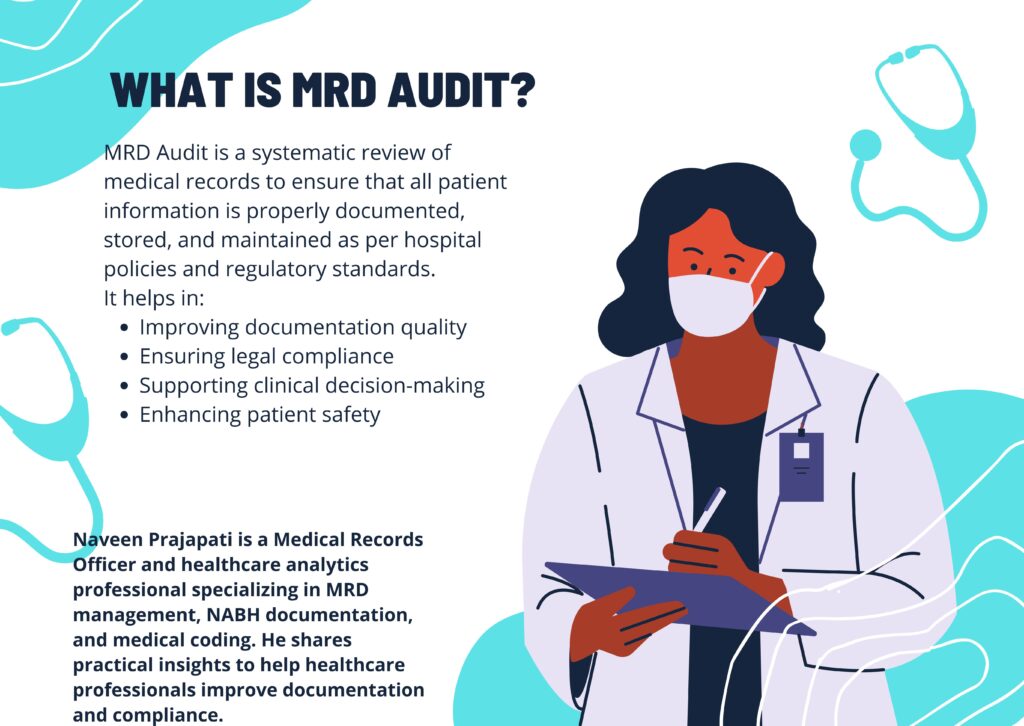
MRD Audit is a systematic review of medical records to ensure that all patient information is properly documented, stored, and maintained as per hospital policies and regulatory standards.
It helps in:
- Improving documentation quality
- Ensuring legal compliance
- Supporting clinical decision-making
- Enhancing patient safety
🔍 Types of MRD Audit
1. Internal Audit
Conducted by hospital staff to monitor daily documentation practices.
2. External Audit
Performed by external agencies like NABH for accreditation.
3. Concurrent Audit
Done during patient treatment (real-time monitoring).
4. Retrospective Audit
Conducted after patient discharge.
📋 MRD Audit Checklist
Here is a complete checklist you can use:
✅ Patient Identification
- Name, Age, Gender
- UHID/Registration Number
- Contact details
✅ Admission Details
- Date and time of admission
- Admission notes
- Consent forms
✅ Clinical Documentation
- History and examination
- Diagnosis
- Treatment plan
- Progress notes
✅ Investigation Reports
- Lab reports
- Radiology reports
- Proper attachment in file
✅ Medication Records
- Prescription details
- Drug administration chart
- Dosage and timing
✅ Discharge Summary
- Final diagnosis
- Treatment given
- Follow-up advice
- Doctor’s signature
✅ Coding and Indexing
- ICD coding accuracy
- Proper indexing of records
✅ Legal Compliance
- Signed consent forms
- Authorization documents
⚠️ Common Mistakes in MRD Audit
- Missing patient details
- Incomplete discharge summary
- Unsigned documents
- Incorrect coding
- Poor handwriting or illegible entries
⭐ Best Practices for MRD Audit
- Use standardized formats
- Train staff regularly
- Implement EMR systems
- Conduct periodic audits
- Ensure proper documentation policies

❓ Frequently Asked Questions (FAQs)
Q1: What is the purpose of MRD audit?
MRD audit ensures that patient records are accurate, complete, and compliant with healthcare standards.
Q2: How often should MRD audit be conducted?
Hospitals should conduct MRD audits regularly—monthly or quarterly.
Q3: Is MRD audit required for NABH?
Yes, MRD audit is essential for NABH accreditation and quality compliance.
Q4: Who conducts MRD audit?
It can be conducted by internal hospital staff or external auditors.
✅ Conclusion
MRD audit is a vital process for maintaining high-quality healthcare documentation. By following a proper checklist and best practices, hospitals can improve patient care, ensure compliance, and achieve accreditation standards like
Written By
Naveen Prajapati is a Medical Records Officer and healthcare analytics professional specializing in MRD management, NABH documentation, and medical coding. He shares practical insights to help healthcare professionals improve documentation and compliance.