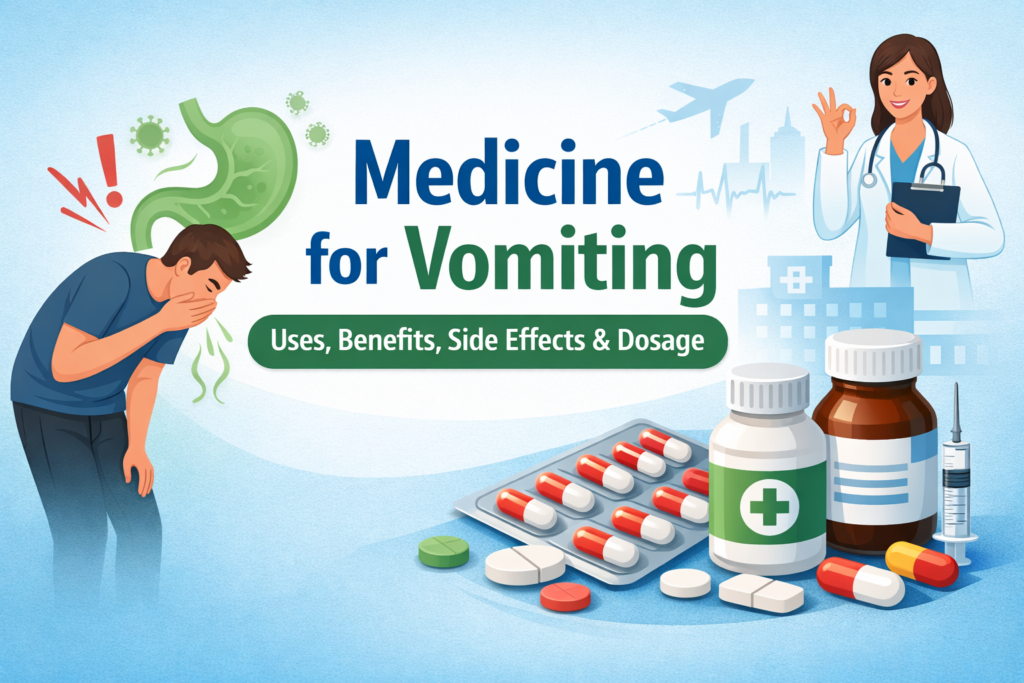
Vomiting is a common health problem that can happen due to many reasons such as food poisoning, stomach infection, motion sickness, pregnancy, overeating, or certain medications. Although vomiting is sometimes the body’s natural way of removing harmful substances, frequent vomiting can lead to dehydration, weakness, and discomfort. Therefore, doctors often prescribe anti-vomiting medicines (antiemetics) to control nausea and vomiting.
Some commonly used medicines for vomiting include Ondansetron, Domperidone, and Metoclopramide. These medicines help reduce the feeling of nausea and stop vomiting by acting on the brain and digestive system.
This article explains the uses, benefits, dosage, side effects, price, and frequently asked questions about medicines used to treat vomiting.
What Is Vomiting Medicine?
Vomiting medicines are drugs used to prevent or treat nausea and vomiting. They work by blocking certain signals in the brain that trigger vomiting. In addition, they also help improve stomach movement and digestion.
Doctors usually prescribe these medicines for conditions such as stomach infections, migraine, chemotherapy side effects, pregnancy nausea, or motion sickness.
Common Medicines for Vomiting
1. Ondansetron
Ondansetron is one of the most commonly prescribed medicines for severe nausea and vomiting. It is often used after surgery, during chemotherapy, or for stomach infections.
2. Domperidone
Domperidone helps improve stomach movement and reduces nausea. It is frequently used for indigestion, acidity, and vomiting.
3. Metoclopramide
Metoclopramide is used to treat nausea caused by migraines, stomach problems, and certain medications.
Uses of Vomiting Medicines
Vomiting medicines are prescribed for several medical conditions. Some common uses include:
- Treatment of nausea and vomiting caused by stomach infections.
- Prevention of vomiting after surgery.
- Control of nausea caused by chemotherapy or radiation therapy.
- Treatment of motion sickness during travel.
- Relief from pregnancy-related nausea (morning sickness).
- Treatment of vomiting caused by migraine headaches.
- Management of vomiting related to food poisoning.
Doctors decide the right medicine based on the cause and severity of the symptoms.
Benefits of Vomiting Medicines
Vomiting medicines provide several health benefits when used correctly.
First, they quickly reduce nausea and vomiting, which improves patient comfort. Secondly, they prevent dehydration caused by repeated vomiting. Third, these medicines help patients continue eating and drinking normally.
Another important benefit is that they support recovery from infections or stomach disorders by controlling symptoms. Additionally, they are helpful for patients undergoing treatments like chemotherapy where vomiting is a common side effect.
Overall, anti-vomiting medicines significantly improve quality of life during illness.
Dosage of Vomiting Medicines
The dosage of vomiting medicines depends on age, medical condition, and severity of symptoms. Therefore, it is important to follow a doctor’s advice before taking them.
Typical general dosage guidelines include:
Ondansetron
- Adults: 4 mg to 8 mg every 8 hours if needed.
- Children: Dose depends on body weight and doctor’s recommendation.
Domperidone
- Adults: 10 mg taken 2–3 times daily before meals.
- Children: Dose based on body weight.
Metoclopramide
- Adults: 10 mg up to three times a day.
- Children: Lower doses as prescribed by a doctor.
Important tips for dosage:
- Always take medicine as prescribed.
- Do not exceed the recommended dose.
- Take tablets with water.
- If vomiting continues for more than 24 hours, consult a doctor.
Possible Side Effects
Like all medicines, vomiting medicines may cause some side effects. However, most side effects are mild and temporary.
Common side effects include:
- Headache
- Constipation
- Dizziness
- Dry mouth
- Fatigue
Less common but serious side effects may include:
- Irregular heartbeat
- Severe allergic reaction
- Muscle stiffness
- Restlessness
If any severe symptoms occur, medical attention should be taken immediately.
Pregnant women, elderly patients, and people with heart disease should consult a doctor before using anti-vomiting medicines.
Price of Vomiting Medicines in India
The price of vomiting medicines varies depending on the brand and dosage. Approximate prices in India are:
- Ondansetron tablets (4 mg): ₹20 – ₹60 for 10 tablets
- Domperidone tablets (10 mg): ₹30 – ₹80 for 10 tablets
- Metoclopramide tablets (10 mg): ₹25 – ₹70 for 10 tablets
Generic medicines are usually cheaper and equally effective. Prices may vary depending on pharmacy location and brand.
Precautions Before Taking Vomiting Medicine
Before using vomiting medicines, consider the following precautions:
- Inform your doctor about any existing medical conditions.
- Tell your doctor about other medicines you are taking.
- Avoid alcohol while taking anti-vomiting medication.
- Do not self-medicate for long periods.
- Drink plenty of fluids to prevent dehydration.
Children and pregnant women should only take these medicines under medical supervision.
Home Care Tips to Reduce Vomiting
Besides medicines, some simple home remedies can also help reduce vomiting:
- Drink small amounts of water or ORS frequently.
- Eat light foods like bananas, rice, or toast.
- Avoid oily and spicy foods.
- Rest and avoid strong smells.
- Ginger tea may help reduce nausea.
These measures can support faster recovery along with prescribed medicines.
Frequently Asked Questions (FAQ)
1. What medicine is best for vomiting?
Common medicines for vomiting include Ondansetron, Domperidone, and Metoclopramide. The best medicine depends on the cause of vomiting.
2. Can I take vomiting medicine without a doctor?
Mild nausea medicines may be available over the counter, but it is safer to consult a doctor for persistent vomiting.
3. How fast do anti-vomiting medicines work?
Most medicines start working within 30 minutes to 1 hour after taking them.
4. Is vomiting medicine safe during pregnancy?
Some medicines may be safe during pregnancy, but they should only be taken under a doctor’s supervision.
5. When should I see a doctor for vomiting?
You should see a doctor if vomiting lasts more than 24 hours, if there is blood in vomit, severe dehydration, or high fever.
6. Can vomiting medicines cause drowsiness?
Yes, some anti-vomiting medicines may cause mild drowsiness or dizziness.
7. Are these medicines safe for children?
Certain medicines are safe for children but the dose must be determined by a pediatrician.
Conclusion
Vomiting medicines play an important role in controlling nausea and preventing complications such as dehydration and weakness. Medicines like Ondansetron, Domperidone, and Metoclopramide are commonly used to treat vomiting caused by infections, motion sickness, or medical treatments.
However, these medicines should always be taken according to medical advice to avoid side effects. If vomiting persists or becomes severe, seeking medical attention is essential for proper diagnosis and treatment.
Using the right medicine along with proper hydration and rest can help manage vomiting effectively and promote faster recovery.