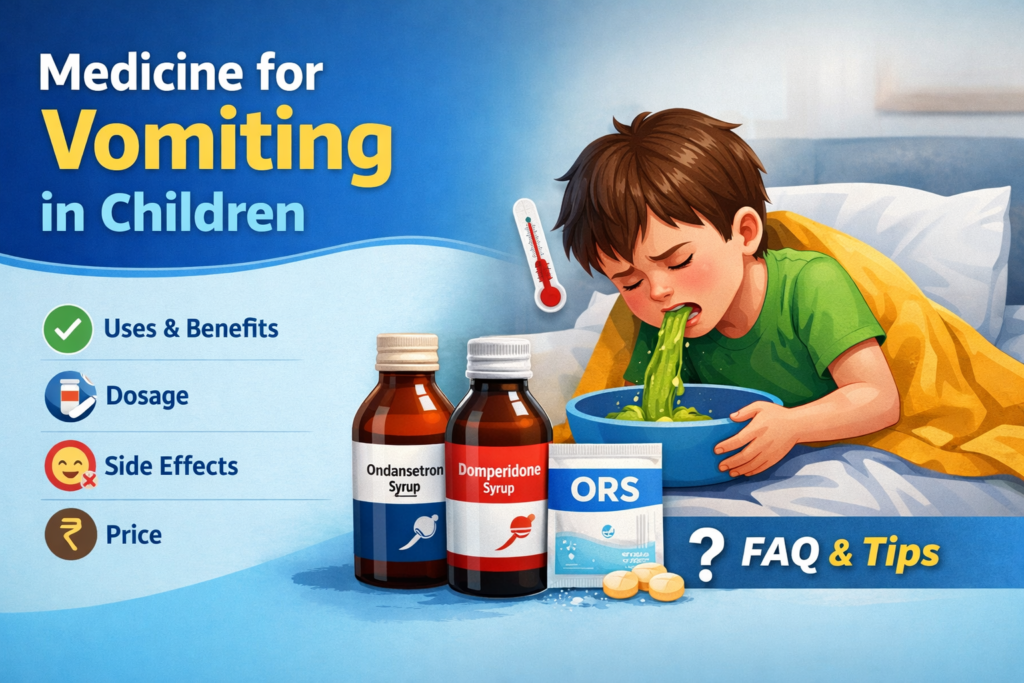
Vomiting in children is a common health problem that many parents face. It can happen due to several reasons such as stomach infection, food poisoning, indigestion, viral fever, motion sickness, or overeating. Although occasional vomiting is usually not serious, frequent vomiting can cause dehydration and weakness in children. Therefore, proper care and the right medicine are important to control the symptoms.
In many cases doctors recommend anti-vomiting medicines along with oral rehydration solutions to prevent dehydration. However, medicines should always be given carefully and preferably after consulting a doctor, especially for infants and small children.
This article explains commonly used medicines for vomiting in children, their uses, benefits, side effects, dosage, price, and frequently asked questions.
Common Medicines for Vomiting in Children
1. Ondansetron Syrup
Ondansetron is one of the most commonly prescribed medicines to stop vomiting in children. It works by blocking the chemicals in the body that trigger nausea and vomiting.
Uses
Ondansetron is used to treat vomiting caused by stomach infection, food poisoning, viral fever, and after medical treatments such as chemotherapy.
Benefits
The medicine works quickly and helps control repeated vomiting. It also helps children keep fluids and food in their stomach, which prevents dehydration.
Dosage
The dose usually depends on the child’s age and weight. Doctors commonly prescribe:
- 2 mg for children under 15 kg
- 4 mg for children between 15–30 kg
- Higher doses only if recommended by a doctor
It is usually given once or twice a day.
Side Effects
- Headache
- Constipation
- Dizziness
- Mild stomach discomfort
Most side effects are mild and temporary.
Price in India
Ondansetron syrup usually costs around ₹40 to ₹90 depending on the brand.
2. Domperidone Syrup
Domperidone is another medicine used to treat nausea and vomiting in children. It improves stomach movement and helps food move properly through the digestive system.
Uses
It is commonly used for vomiting caused by indigestion, stomach upset, or gastric problems.
Benefits
Domperidone reduces nausea, improves digestion, and helps children feel comfortable after vomiting.
Dosage
The usual pediatric dose is about 0.25 mg per kg body weight, taken two or three times a day before meals. The exact dose should always be decided by a doctor.
Side Effects
- Dry mouth
- Headache
- Stomach cramps
- Rarely irregular heartbeat if taken in excess
Price
Domperidone syrup generally costs between ₹60 and ₹120.
3. Oral Rehydration Solution (ORS)
ORS is not exactly an anti-vomiting medicine, but it is extremely important when a child is vomiting. It replaces lost fluids and prevents dehydration.
Uses
ORS is used in vomiting, diarrhea, dehydration, and stomach infections.
Benefits
It restores water and electrolytes in the body. It also prevents weakness and dizziness in children.
Dosage
Small sips should be given every few minutes. If vomiting continues, give one or two teaspoons every 5–10 minutes.
Side Effects
ORS is very safe and rarely causes side effects.
Price
ORS packets usually cost around ₹20 to ₹40.
When Should You Give Medicine for Vomiting?
Parents should consider medicine if:
- The child vomits repeatedly
- Vomiting lasts more than 6–8 hours
- The child cannot keep liquids down
- There are signs of dehydration such as dry mouth or less urination
However, mild vomiting often improves with rest, light food, and fluids.
Home Care Tips for Vomiting Children
While medicines help control vomiting, proper home care is also important.
First, give small amounts of clear fluids like ORS, coconut water, or plain water. This helps prevent dehydration.
Second, avoid heavy or oily foods for a few hours. Instead, give light foods such as rice, bananas, toast, or khichdi once vomiting stops.
Third, allow the child to rest. Movement immediately after vomiting may worsen nausea.
Finally, keep the child in an upright position after eating or drinking to reduce the chances of vomiting again.
Warning Signs That Need Medical Attention
Sometimes vomiting may indicate a serious condition. Parents should immediately consult a doctor if the child has:
- Continuous vomiting for more than 24 hours
- Blood or green color in vomit
- High fever
- Severe stomach pain
- Signs of dehydration
- Vomiting in infants younger than 6 months
Quick medical care helps prevent complications.
Frequently Asked Questions (FAQ)
1. What is the best medicine for vomiting in children?
Ondansetron syrup is commonly considered one of the most effective medicines for vomiting in children. However, the doctor decides the best medicine depending on the cause.
2. Can vomiting stop without medicine?
Yes. Mild vomiting often stops on its own within a few hours. Fluids, rest, and light food may be enough in many cases.
3. Is ORS necessary when a child is vomiting?
Yes. ORS is very important because vomiting causes fluid loss. ORS helps prevent dehydration and weakness.
4. Can I give anti-vomiting medicine without consulting a doctor?
It is better to consult a doctor before giving medicine, especially for infants and young children.
5. How long does vomiting last in children?
Most cases improve within 6–24 hours. If vomiting continues for more than a day, medical advice is recommended.
6. What foods should be avoided during vomiting?
Avoid oily foods, spicy food, junk food, and dairy products until the child feels better.
7. When should I take my child to a hospital?
You should seek medical help if vomiting is severe, persistent, or accompanied by dehydration, fever, or severe stomach pain.
Conclusion
Vomiting in children is usually caused by infections, stomach upset, or food problems. Although it is common, repeated vomiting can lead to dehydration and weakness. Medicines such as ondansetron and domperidone help control vomiting, while ORS helps maintain hydration. However, parents should always monitor symptoms carefully and consult a doctor if vomiting continues or worsens.
Proper care, adequate fluids, and timely treatment can help children recover quickly and safely.