Introduction
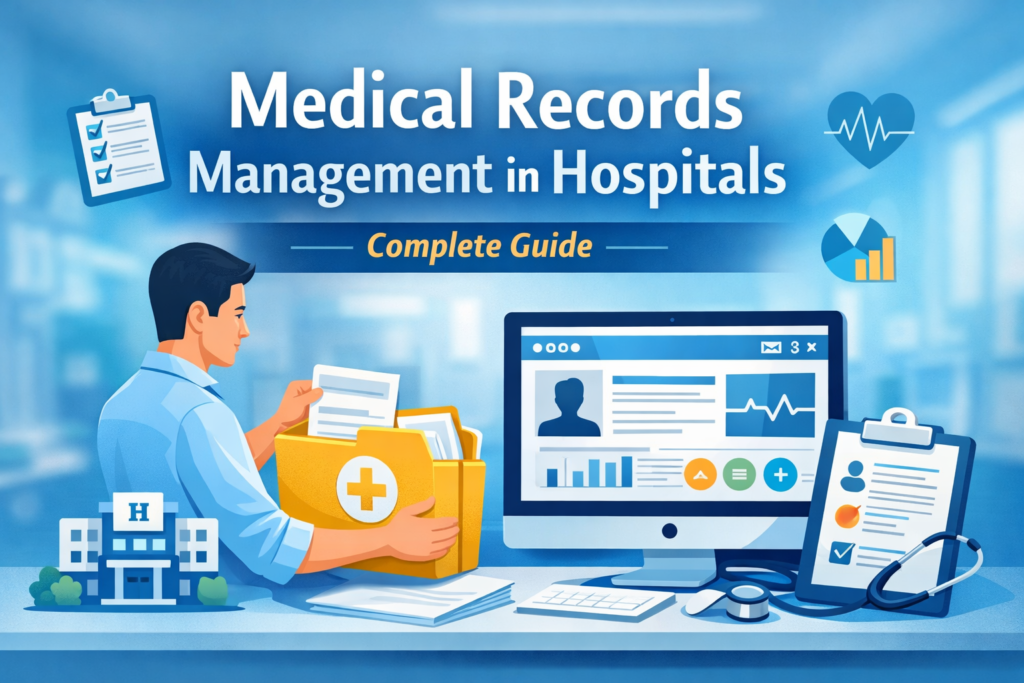
The healthcare industry is rapidly evolving with digital transformation, making data management more important than ever. One of the most crucial roles in this ecosystem is that of a Medical Records Officer (MRO). These professionals ensure that patient data is accurate, secure, and accessible when needed.
With the growing demand for healthcare services, hospitals, clinics, and insurance companies are actively hiring skilled Medical Records Officers. This blog will give you a complete understanding of the job role, responsibilities, salary, required skills, and future scope of a Medical Records Officer.
What is a Medical Records Officer?
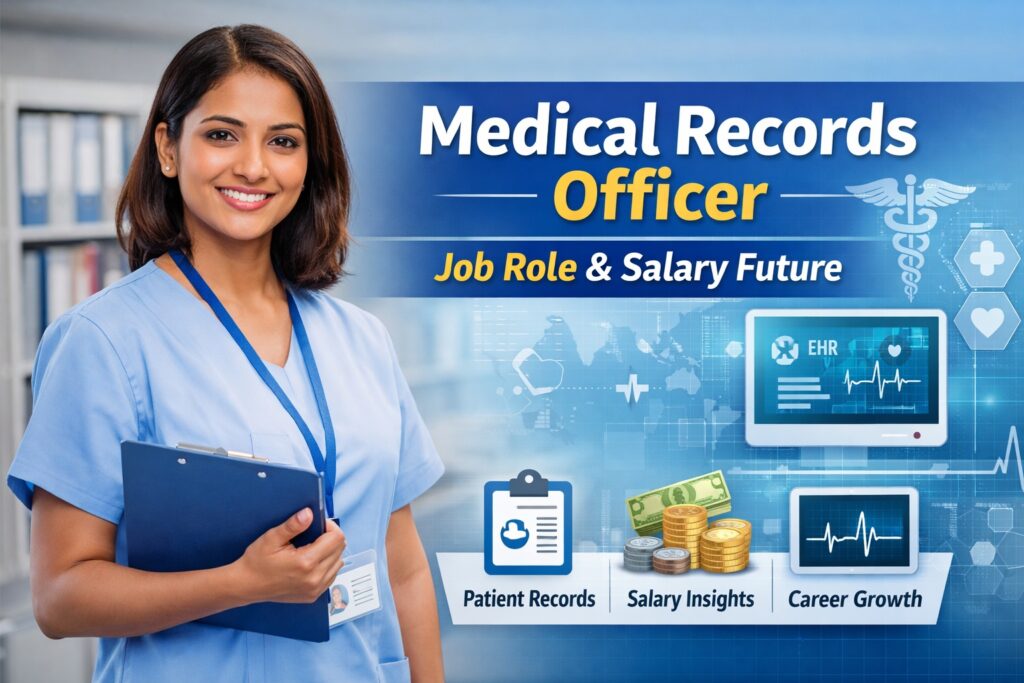
A Medical Records Officer (MRO) is a healthcare professional responsible for managing patient records, ensuring proper documentation, maintaining confidentiality, and supporting clinical and administrative functions.
They play a vital role in:
- Maintaining patient history
- Supporting medical coding and billing
- Ensuring compliance with healthcare regulations (like NABH, HIPAA)
- Managing digital health records (EHR/EMR)
Key Responsibilities of a Medical Records Officer
1. Managing Patient Records
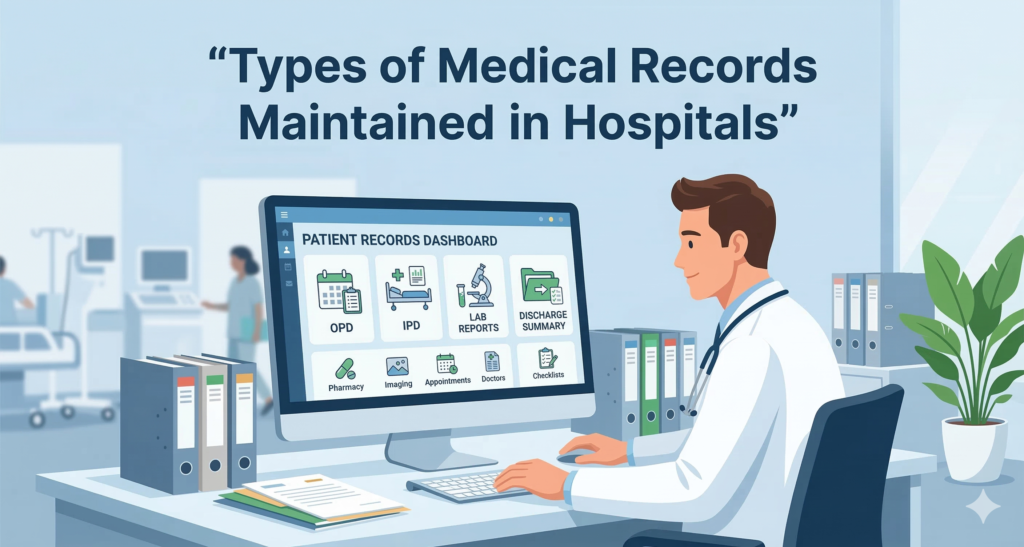
The primary responsibility is to maintain accurate and updated patient records, including:
- Admission details
- Diagnosis and treatment history
- Discharge summaries
- Lab reports
2. Ensuring Data Accuracy
MROs verify that all medical records are complete and error-free. Even small mistakes (like gender or diagnosis errors) can lead to serious issues in treatment or insurance claims.
3. Medical Coding & Documentation
They assist in assigning correct codes (ICD, CPT, HCPCS) for diagnoses and procedures, which is essential for billing and insurance processing.
4. Maintaining Confidentiality
Patient data is highly sensitive. MROs ensure strict confidentiality and compliance with hospital policies.
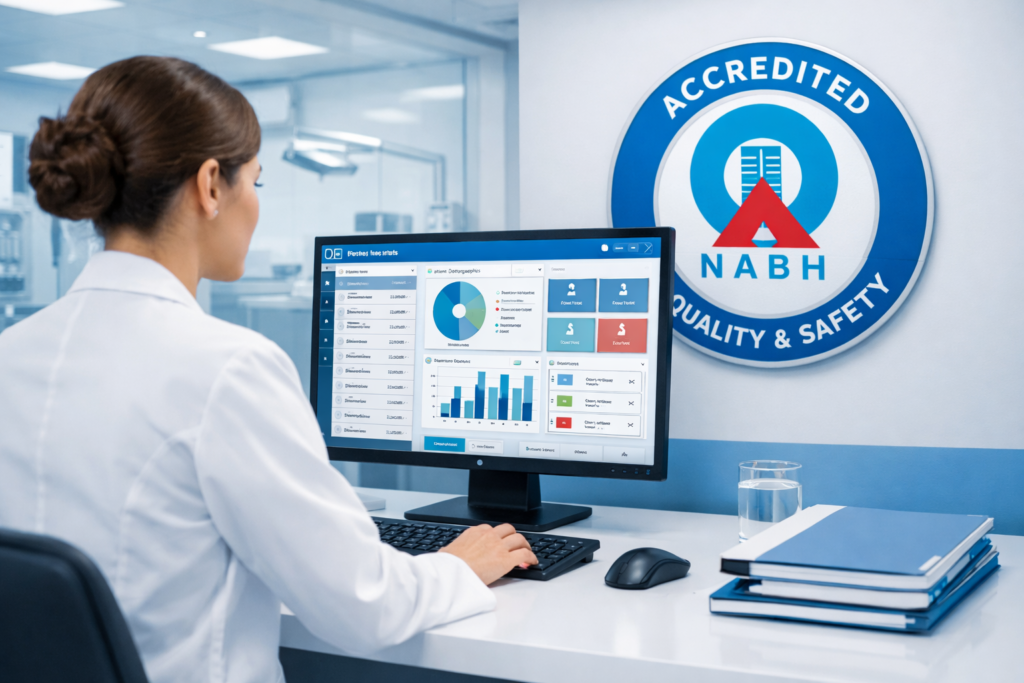
5. Supporting NABH Accreditation
Medical Records Officers play a major role in hospital accreditation by:
- Maintaining documentation standards
- Ensuring audit readiness
- Implementing quality control measures
6. Digital Record Management (EHR/EMR)
With digital healthcare systems, MROs manage electronic records using hospital software.
Skills Required to Become a Medical Records Officer
To succeed in this role, you need a mix of technical and soft skills:
Technical Skills
- Knowledge of medical terminology
- Understanding of ICD, CPT, HCPCS coding
- Familiarity with EHR/EMR systems
- Basic knowledge of data analytics (optional but valuable)
Soft Skills
- Attention to detail
- Communication skills
- Time management
- Confidentiality and ethics
Educational Qualification
To become a Medical Records Officer, you can pursue:
- Diploma or Certification in Medical Coding
- Bachelor’s degree in Healthcare Administration
- Courses in Health Information Management (HIM)
Additional certifications like CPC (Certified Professional Coder) can boost your career.
Salary of Medical Records Officer in India (2026)
Salary varies based on experience, skills, and location.
Entry-Level Salary
- ₹12,000 to ₹20,000 per month
Mid-Level (2–5 years experience)
- ₹25,000 to ₹50,000 per month
Experienced Professionals
- ₹50,000 to ₹1,00,000+ per month
Freelance / Remote Roles
- ₹20,000 to ₹80,000 depending on projects
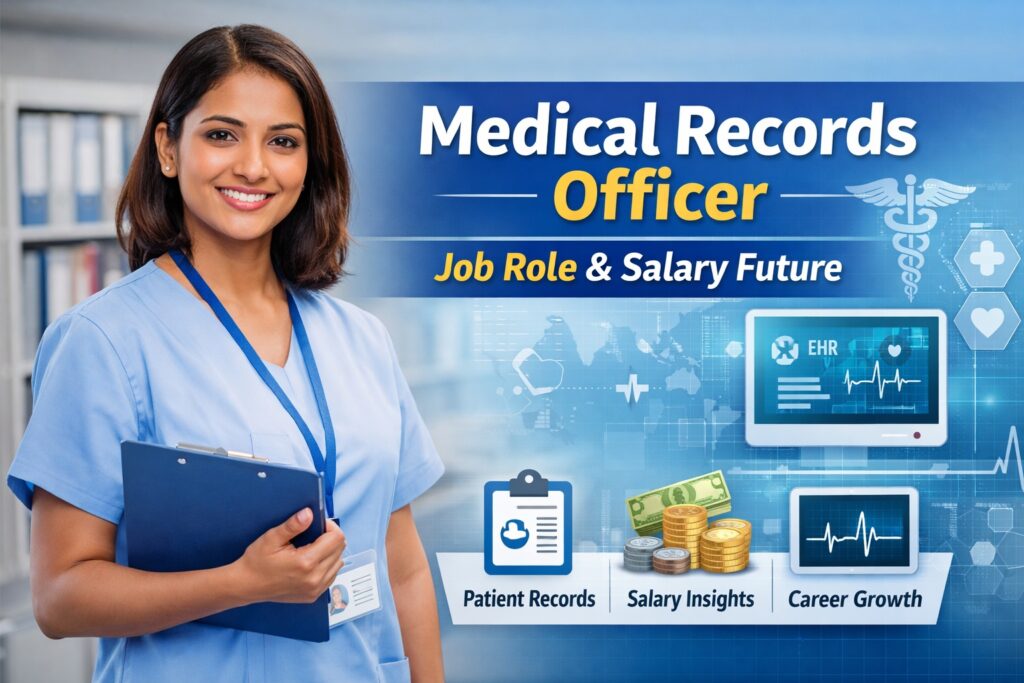
Real-Life Example
Let’s understand the role with an example:
Case: A patient is admitted for surgery.
Role of MRO:
- Records patient details during admission
- Maintains diagnostic reports
- Ensures discharge summary is correct
- Verifies billing codes for insurance claims
If a mistake occurs (e.g., wrong gender mentioned), the MRO must correct it before submission to avoid claim rejection.
Career Growth Opportunities
Medical Records Officer is not just an entry-level job—it offers excellent growth:
Career Path:
- Medical Records Technician
- Medical Records Officer
- Senior MRO / Supervisor
- Health Information Manager
- Hospital Administrator
With additional skills, you can move into:
- Medical Coding Specialist
- Data Analyst (Healthcare)
- Quality Auditor (NABH)
Future Scope of Medical Records Officer
The future of this career is very promising, especially due to digital healthcare trends.
1. Increasing Demand
Hospitals and clinics are expanding, increasing demand for skilled MROs.
2. Digital Health Records
Government initiatives like Digital India Health Mission are boosting EHR adoption.
3. Remote Work Opportunities
Many companies offer work-from-home medical coding and record management jobs.
4. Data Analytics Integration
Healthcare is becoming data-driven. Professionals with analytics skills will have higher opportunities.
Advantages of Becoming a Medical Records Officer
- Stable healthcare career
- High demand in India and abroad
- Opportunity for remote jobs
- Growth into management roles
- Suitable for both freshers and experienced professionals
Challenges in This Role
- High responsibility for accuracy
- Handling confidential data
- Pressure during audits and insurance claims
- Need for continuous learning
Tips to Become Successful MRO
- Learn medical coding (ICD, CPT)
- Gain hands-on experience in hospitals
- Improve computer and software skills
- Stay updated with healthcare regulations
- Learn basic data analytics (Excel, Power BI)
Conclusion
The role of a Medical Records Officer is crucial in modern healthcare systems. From maintaining patient data to supporting billing and compliance, MROs ensure smooth hospital operations.
With the rise of digital healthcare and data analytics, this career offers excellent growth, stability, and future opportunities. If you are interested in healthcare and data management, this is one of the best career options in 2026 and beyond.
FAQs (Frequently Asked Questions)
1. What does a Medical Records Officer do?
They manage patient records, ensure accuracy, and maintain confidentiality in healthcare organizations.
2. What is the salary of an MRO in India?
It ranges from ₹12,000 (fresher) to ₹1,00,000+ (experienced professionals).
3. Is medical coding necessary for MRO?
Yes, basic knowledge of medical coding is highly beneficial.
4. Can I work from home as a Medical Records Officer?
Yes, especially in medical coding and digital record management roles.
5. What is the future of Medical Records jobs?
Very strong due to digital healthcare systems and increasing data management needs.