
Introduction
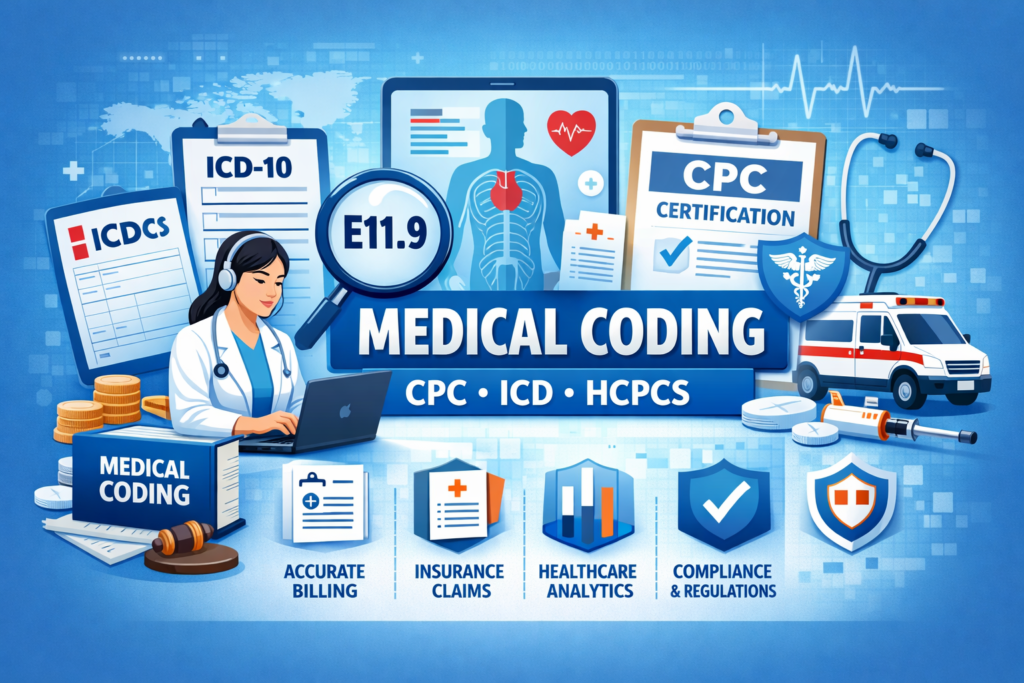
Medical coding is a vital part of the healthcare system that ensures accurate documentation, billing, and data management. It involves converting medical diagnoses, procedures, and services into standardized codes. These codes are used globally for insurance claims, hospital records, and healthcare analytics.
With the rise of digital healthcare systems and insurance-based treatments, medical coding has become one of the most in-demand careers in the healthcare industry. In this blog, we will explore the key types of medical coding systems—CPC, ICD, and HCPCS, along with their uses and benefits.
What is Medical Coding?
Medical coding is the process of translating medical reports such as physician notes, lab results, and discharge summaries into alphanumeric codes. These codes represent diseases, treatments, procedures, and medical equipment.
Professional medical coders ensure that healthcare providers are reimbursed correctly by insurance companies and that patient records are maintained accurately.
Types of Medical Coding Systems
1. CPC (Certified Professional Coder)
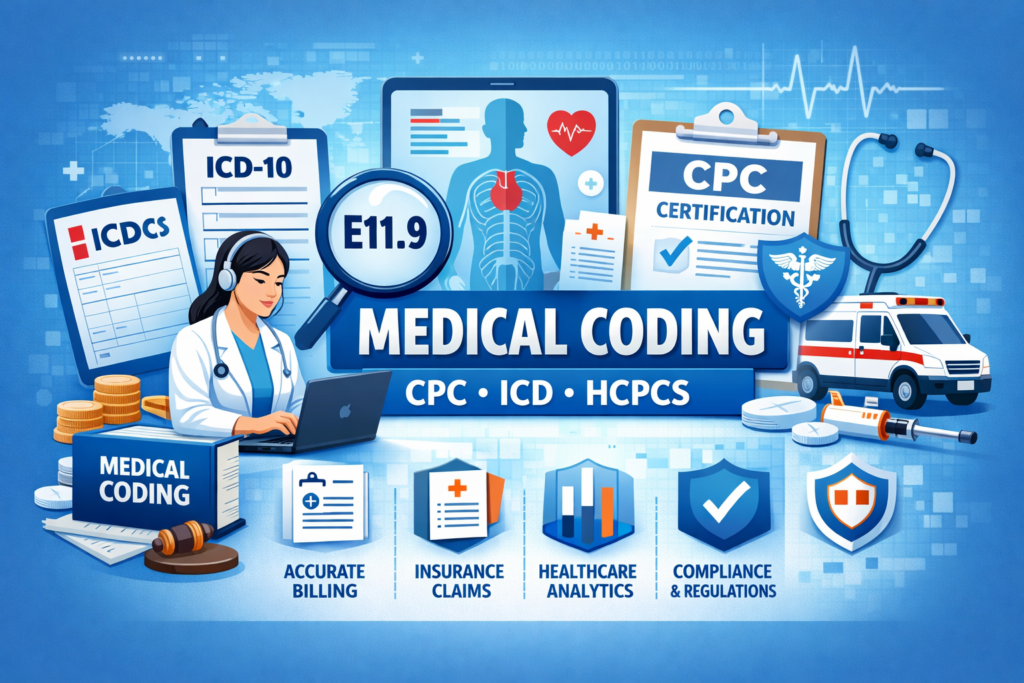
CPC is not a coding system but a professional certification offered by AAPC (American Academy of Professional Coders). It validates the expertise of a medical coder in assigning correct procedure and diagnosis codes.
A CPC-certified professional is trained in:
- Medical terminology
- Anatomy and physiology
- Coding guidelines
- Healthcare regulations
Key Features:
- Recognized globally
- Focuses on outpatient coding
- Improves job opportunities and salary
2. ICD (International Classification of Diseases)
ICD codes are used to classify diseases, symptoms, and health conditions. These codes are maintained by the World Health Organization (WHO).
The latest version widely used is ICD-10.
Example:
- A00 – Cholera
- E11 – Type 2 Diabetes Mellitus
Uses of ICD Codes:
- Recording patient diagnoses
- Tracking disease trends
- Supporting insurance claims
- Public health analysis
3. HCPCS (Healthcare Common Procedure Coding System)
HCPCS codes are used to describe medical procedures, services, and equipment. It is mainly used in the United States for billing Medicare and Medicaid patients.
HCPCS is divided into two levels:
Level I:
- Based on CPT (Current Procedural Terminology)
- Used for medical procedures and services
Level II:
- Used for non-physician services like:
- Ambulance services
- Medical equipment (wheelchairs, oxygen)
- Prosthetics
Example:
- E0114 – Crutches underarm
- A0428 – Ambulance service
Uses of Medical Coding
Medical coding plays a crucial role in healthcare operations. Below are the key uses:
1. Accurate Billing and Insurance Claims
Medical codes ensure that healthcare providers receive proper reimbursement from insurance companies. Without correct coding, claims may be denied or delayed.
2. Maintaining Patient Records
Coding helps organize patient data in electronic health records (EHR), making it easier for doctors to access medical history.
3. Healthcare Data Analysis
Hospitals and government organizations use coded data to analyze disease patterns, treatment outcomes, and healthcare trends.
4. Legal Compliance
Medical coding ensures compliance with healthcare regulations and reduces the risk of fraud or legal issues.
5. Communication Standardization
Codes create a universal language that healthcare professionals across the world can understand, eliminating confusion.
Benefits of Medical Coding
1. High Demand Career
Medical coding is one of the fastest-growing professions in healthcare. With increasing digitization, skilled coders are in high demand globally.
2. Work from Home Opportunities
Many organizations offer remote jobs for certified coders, making it a flexible career option.
3. Good Salary Package
Certified professionals, especially CPC holders, can earn attractive salaries with experience.
4. Career Growth
Medical coders can advance to roles like:
- Medical auditor
- Coding manager
- Health information manager
5. Contribution to Healthcare System
Medical coders play a critical role in ensuring accurate patient care documentation and smooth healthcare operations.
Why Medical Coding is Important in India
In India, the healthcare sector is rapidly growing, and the adoption of digital health records is increasing. Medical coding is becoming essential for:
- Hospital management systems
- Insurance claim processing
- NABH accreditation compliance
- Medical research and analytics
With the expansion of medical tourism and insurance services, the demand for trained coders is increasing significantly.
Skills Required for Medical Coding
To become a successful medical coder, you need:
- Strong knowledge of medical terminology
- Understanding of anatomy and physiology
- Attention to detail
- Analytical thinking
- Familiarity with coding guidelines
Certification like CPC adds great value to your profile.
Conclusion
Medical coding is the backbone of modern healthcare administration. Systems like ICD, HCPCS, and certifications like CPC ensure that healthcare services are documented, billed, and analyzed accurately.
Whether it is for insurance claims, patient record management, or healthcare analytics, medical coding plays a vital role in improving efficiency and transparency.
If you are looking for a stable, high-growth career in healthcare, medical coding is an excellent choice. With proper training and certification, you can build a rewarding career with global opportunities.
FAQ
Q1. What is CPC in medical coding?
CPC is a certification that validates a coder’s expertise in medical coding, especially outpatient services.
Q2. What is the difference between ICD and HCPCS?
ICD codes represent diseases, while HCPCS codes represent medical procedures and equipment.
Q3. Is medical coding a good career in India?
Yes, it offers high demand, good salary, and work-from-home opportunities.
Q4. Can freshers start a career in medical coding?
Yes, with proper training and certification like CPC, freshers can enter this field.