
Introduction
Electronic Medical Records (EMR) systems have become a critical component of modern healthcare management. Hospitals, clinics, and healthcare providers are rapidly transitioning from paper-based systems to digital records to improve efficiency, patient safety, and regulatory compliance.
However, implementing an EMR system is not just about installing software—it requires careful planning, training, workflow redesign, and continuous monitoring.
This comprehensive EMR implementation guide will help healthcare organizations successfully adopt EMR systems with minimal disruption and maximum benefits.
What is EMR?
EMR (Electronic Medical Record) is a digital version of a patient’s paper chart. It contains medical history, diagnoses, medications, treatment plans, immunization dates, allergies, lab results, and doctor notes.
Unlike traditional records, EMRs allow:
- Quick access to patient data
- Better coordination between departments
- Improved clinical decision-making
- Enhanced patient safety
Benefits of EMR Implementation
Implementing an EMR system offers numerous advantages for healthcare facilities:
1. Improved Patient Care
Doctors can access real-time patient data, reducing medical errors and improving diagnosis accuracy.
2. Increased Efficiency
Administrative tasks such as billing, documentation, and appointment scheduling become faster and more organized.
3. Better Data Management
All patient records are stored securely in a centralized system, reducing duplication and loss of data.
4. Regulatory Compliance
EMR systems help hospitals comply with healthcare standards like NABH and other legal requirements.
5. Cost Reduction
Although initial investment is high, EMR reduces long-term costs related to paper, storage, and manpower.
Pre-Implementation Planning
Successful EMR implementation starts with proper planning. Skipping this phase can lead to failure.
Define Objectives
Clearly outline what you want to achieve:
- Improve patient care
- Reduce paperwork
- Enhance reporting
- Meet compliance standards
Form an Implementation Team
Include:
- Doctors
- Nurses
- IT staff
- Medical Records Officers
- Hospital administrators
Budget Planning
Consider:
- Software cost
- Hardware requirements
- Training expenses
- Maintenance cost
EMR Implementation Steps
Step 1: Needs Assessment
Evaluate your hospital’s requirements:
- Number of users
- Departments involved
- Patient volume
- Existing workflows
This helps in selecting the right EMR system.
Step 2: Choose the Right EMR Software
Key factors to consider:
- User-friendly interface
- Customization options
- Data security
- Integration with lab and billing systems
- Vendor support
Step 3: Infrastructure Setup
Ensure proper IT infrastructure:
- Computers or tablets
- Secure servers or cloud system
- Internet connectivity
- Backup systems
Step 4: Data Migration
Transfer existing patient data from paper or old systems to EMR.
Important tips:
- Verify accuracy
- Avoid duplication
- Maintain confidentiality
Step 5: Workflow Redesign
EMR changes how work is done in a hospital.
Example:
- Paper prescriptions → Digital prescriptions
- Manual reports → Automated reports
Adjust workflows to align with the new system.
Step 6: Staff Training
Training is one of the most critical steps.
Provide:
- Hands-on training sessions
- Role-based training (Doctors, Nurses, MRD staff)
- User manuals and support
Step 7: Pilot Testing
Before full implementation:
- Test the system in one department
- Identify issues
- Fix errors
Step 8: Go-Live Implementation
Launch EMR across the organization.
Tips for smooth go-live:
- Provide IT support
- Monitor system performance
- Address user issues immediately
Step 9: Monitoring and Evaluation
After implementation:
- Track system usage
- Collect feedback
- Improve processes
Common Challenges in EMR Implementation
Resistance to Change
Staff may hesitate to adopt new technology.
Solution: Proper training and awareness programs.
High Initial Cost
EMR systems require significant investment.
Solution: Focus on long-term ROI and efficiency gains.
Data Security Concerns
Risk of data breaches.
Solution: Use secure systems with encryption and access controls.
Technical Issues
System downtime or errors.
Solution: Maintain strong IT support and backup systems.
Best Practices for Successful EMR Implementation
- Start with a clear strategy
- Choose the right vendor
- Involve all stakeholders
- Provide continuous training
- Ensure data accuracy
- Monitor performance regularly
Role of Medical Records Department (MRD)
The Medical Records Department plays a crucial role in EMR implementation:
- Ensures proper documentation
- Maintains data quality
- Oversees data migration
- Supports compliance and audits
- Coordinates with IT and clinical staff
EMR vs EHR: Key Difference
| Feature | EMR | EHR |
|---|---|---|
| Scope | Single hospital | Multiple organizations |
| Data Sharing | Limited | Extensive |
| Usage | Internal | External + Internal |
Future of EMR Systems
The future of EMR includes:
- AI-based diagnosis support
- Voice recognition documentation
- Mobile access for doctors
- Integration with wearable devices
- Cloud-based systems
Healthcare is becoming more digital, and EMR is at the center of this transformation.
Conclusion
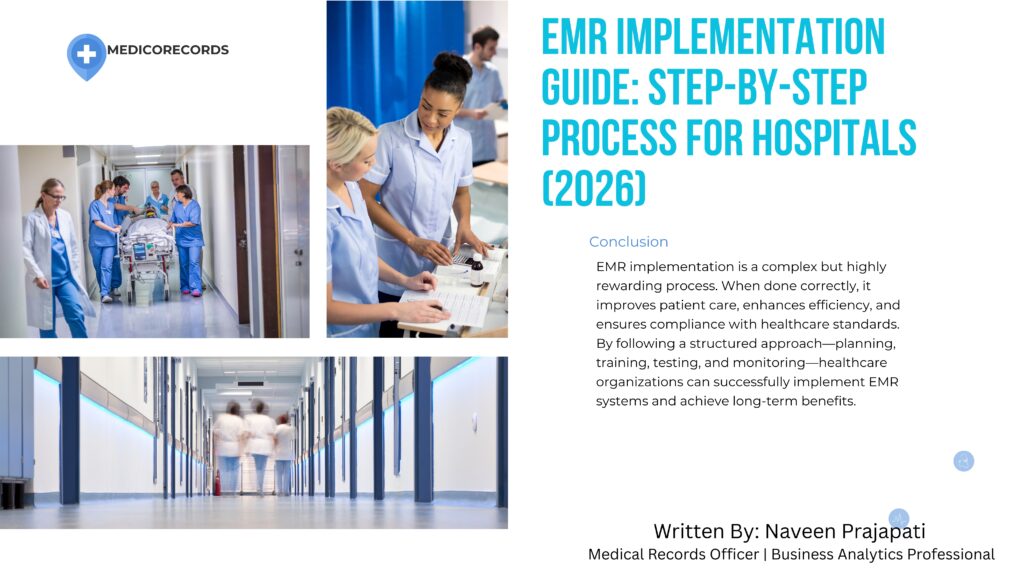
EMR implementation is a complex but highly rewarding process. When done correctly, it improves patient care, enhances efficiency, and ensures compliance with healthcare standards.
By following a structured approach—planning, training, testing, and monitoring—healthcare organizations can successfully implement EMR systems and achieve long-term benefits.
FAQs (Frequently Asked Questions)
1. What is EMR implementation?
EMR implementation is the process of adopting and integrating electronic medical record systems in a healthcare facility.
2. How long does EMR implementation take?
It usually takes 3 to 12 months depending on hospital size and complexity.
3. What is the cost of EMR implementation?
Costs vary widely based on software, infrastructure, and hospital size, ranging from small clinic budgets to large hospital investments.
4. Why is training important in EMR implementation?
Training ensures that staff can use the system efficiently and reduces errors during operation.
5. What are the risks of EMR implementation?
Common risks include data loss, staff resistance, and technical issues, which can be minimized with proper planning.
Written By: Naveen Prajapati
Naveen Prajapati is a Medical Records Officer and Business Analytics professional with expertise in hospital documentation, NABH standards, EMR implementation, and healthcare data management. He shares practical insights to help healthcare organizations improve efficiency, compliance, and patient care.