
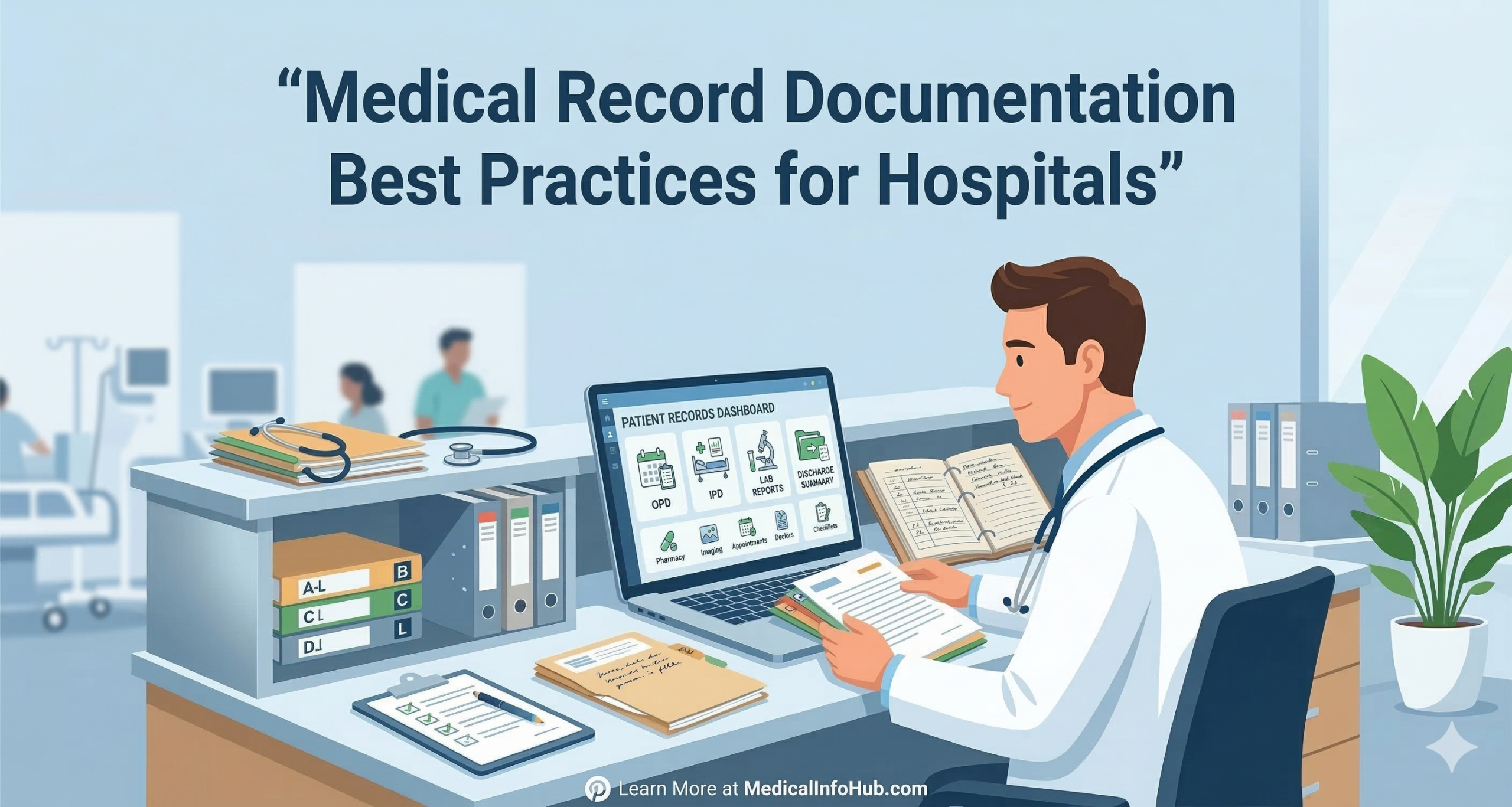
Medical record documentation is the backbone of hospital operations. Accurate and well-maintained medical records help doctors provide better treatment, ensure patient safety, support hospital administration, and maintain legal compliance. In modern healthcare systems, proper documentation is also essential for quality management, insurance claims, accreditation standards, and data analysis.
Hospitals that follow proper documentation practices improve patient care, reduce medical errors, and strengthen communication between healthcare professionals. This article explains the best practices for medical record documentation in hospitals in clear and simple language.
What is Medical Record Documentation?
Medical record documentation refers to the process of recording patient information during hospital care. These records include details about diagnosis, treatment, medications, laboratory results, procedures, and discharge summaries.
Medical records may be maintained in two formats:
• Paper-based medical records
• Electronic Medical Records (EMR) or Electronic Health Records (EHR)
Both systems require accurate and standardized documentation to ensure reliable patient information.
Importance of Proper Medical Record Documentation
1. Improves Patient Care
Complete medical records help doctors and nurses understand a patient’s medical history, previous treatments, allergies, and test results. This allows healthcare providers to make better clinical decisions.
2. Ensures Patient Safety
Incorrect or missing documentation can lead to medication errors, wrong treatments, or delayed diagnosis. Accurate documentation reduces these risks.
3. Supports Legal Protection
Medical records serve as legal documents. If a dispute or malpractice claim occurs, proper documentation provides evidence of the care provided.
4. Helps in Hospital Accreditation
Healthcare accreditation programs require hospitals to maintain proper medical records. Good documentation helps hospitals meet quality standards and regulatory requirements.
5. Improves Communication
Doctors, nurses, lab technicians, and other healthcare professionals rely on medical records to communicate about patient care. Clear documentation ensures everyone understands the patient’s condition and treatment plan.
Key Components of a Medical Record
A complete hospital medical record typically includes the following sections:
• Patient identification details
• Registration and admission records
• Medical history
• Physical examination notes
• Doctor’s progress notes
• Nursing notes
• Medication charts
• Laboratory and diagnostic reports
• Operation or procedure notes
• Consent forms
• Discharge summary
• Billing and insurance information
Each document must be properly recorded, dated, and signed by the responsible healthcare professional.
Best Practices for Medical Record Documentation
1. Write Clearly and Legibly
Documentation should be easy to read and understand. Poor handwriting or unclear notes can create confusion and lead to medical errors.
If hospitals use paper records, staff must write clearly using blue or black ink. Electronic records should follow standard typing formats.
2. Record Information Immediately
Healthcare providers should document patient information as soon as possible after providing care. Delayed documentation may result in missing or incorrect information.
For example, after examining a patient, the doctor should immediately write progress notes and treatment plans.
3. Use Standard Medical Terminology
Hospitals should use approved medical abbreviations and terminology. Avoid using unofficial or confusing abbreviations.
Standard terminology improves communication among healthcare professionals and reduces the chances of misunderstanding.
4. Include Date, Time, and Signature
Every entry in a medical record must include:
• Date
• Time
• Name of the healthcare provider
• Signature or electronic authentication
This helps identify who provided the care and when the documentation was created.
5. Maintain Accuracy
Medical records must always contain correct and factual information. Never guess or add incorrect details.
If an error occurs in paper records, draw a single line through the incorrect information, write the correct entry, and sign with date and time. Never erase or use correction fluid.
6. Ensure Patient Confidentiality
Medical records contain sensitive patient information. Hospitals must protect patient privacy and follow confidentiality rules.
Only authorized healthcare staff should access patient records. Digital records must be protected with passwords and secure systems.
7. Use Structured Documentation Formats
Hospitals should follow standard formats such as:
SOAP Notes
• S – Subjective information
• O – Objective findings
• A – Assessment
• P – Plan of treatment
Structured formats improve clarity and consistency in medical documentation.
8. Maintain Proper Filing and Indexing
Hospitals must organize medical records properly to ensure quick retrieval when needed.
Medical record departments should maintain:
• Patient file numbering systems
• Indexing systems
• Secure storage systems
This helps hospitals easily locate patient records during follow-up visits or emergencies.
9. Document Informed Consent
Before surgeries, procedures, or high-risk treatments, hospitals must document informed consent from the patient or family.
Consent forms should include:
• Procedure details
• Risks and benefits
• Patient signature
• Doctor signature
• Date and time
Proper consent documentation protects both the patient and the hospital.
10. Maintain Discharge Summaries
Discharge summaries are one of the most important documents in a medical record. They provide a complete overview of the patient’s hospital stay.
A discharge summary should include:
• Diagnosis
• Treatment provided
• Procedures performed
• Medications prescribed
• Follow-up instructions
This document helps patients continue care after leaving the hospital.
Role of the Medical Records Department (MRD)
The Medical Records Department plays an important role in maintaining hospital documentation systems.
MRD responsibilities include:
• Managing patient files
• Ensuring proper documentation standards
• Coding and indexing medical records
• Maintaining record confidentiality
• Supporting hospital audits and accreditation
• Providing data for research and statistics
A well-organized MRD improves hospital efficiency and supports quality healthcare services.
Common Documentation Errors in Hospitals
Many hospitals face documentation challenges due to lack of training or workload pressure. Common mistakes include:
• Missing signatures
• Incomplete patient details
• Delayed documentation
• Incorrect abbreviations
• Missing consent forms
• Incomplete discharge summaries
Hospitals should regularly train staff to avoid these mistakes.
Tips to Improve Medical Record Documentation
Hospitals can improve documentation quality by implementing the following strategies:
• Conduct regular staff training programs
• Create standard documentation guidelines
• Perform internal documentation audits
• Use electronic health record systems
• Monitor compliance through quality indicators
Continuous improvement in documentation practices leads to better patient outcomes and hospital management.
Conclusion
Medical record documentation is a critical component of hospital healthcare systems. Proper documentation ensures accurate patient information, improves communication among healthcare professionals, supports legal protection, and enhances patient safety.
Hospitals must establish clear documentation policies, train healthcare staff regularly, and maintain strict confidentiality standards. By following best practices in medical record documentation, hospitals can improve healthcare quality and build trust with patients.
Frequently Asked Questions (FAQs)
1. What is medical record documentation?
Medical record documentation is the process of recording patient information related to diagnosis, treatment, and healthcare services provided during hospital care.
2. Why are medical records important in hospitals?
Medical records help doctors make better treatment decisions, ensure patient safety, support legal protection, and improve hospital management.
3. What information is included in a medical record?
Medical records include patient details, medical history, doctor notes, nursing notes, lab reports, medication charts, consent forms, and discharge summaries.
4. Who is responsible for maintaining medical records?
Doctors, nurses, and hospital staff are responsible for documenting patient information, while the Medical Records Department manages storage and organization.
5. What is the role of MRD in hospitals?
The Medical Records Department manages patient files, ensures documentation quality, maintains confidentiality, and supports hospital audits and accreditation.
6. What are SOAP notes in medical documentation?
SOAP notes are a structured documentation format that includes Subjective information, Objective findings, Assessment, and Plan of treatment.
7. How can hospitals improve documentation quality?
Hospitals can improve documentation through staff training, standardized forms, electronic records, and regular audits.
8. Why is patient confidentiality important?
Patient confidentiality protects personal health information and ensures trust between patients and healthcare providers.
9. What should be included in a discharge summary?
A discharge summary should include diagnosis, treatment provided, medications, procedures performed, and follow-up instructions.
10. Can medical records be used in legal cases?
Yes, medical records are legal documents and may be used as evidence in medical negligence or legal disputes.
11. How long should hospitals keep medical records?
Record retention periods vary by country and hospital policy, but hospitals usually keep records for several years for legal and clinical purposes.
12. What are common documentation mistakes?
Common mistakes include missing signatures, incomplete entries, delayed documentation, and unclear handwriting.
13. What is electronic medical record documentation?
Electronic medical record documentation refers to storing and managing patient data digitally using hospital information systems.
14. Why should documentation be done immediately?
Immediate documentation ensures accurate information and reduces the risk of forgetting important clinical details.
15. How does proper documentation improve patient safety?
Accurate documentation helps healthcare providers understand patient conditions, avoid medication errors, and deliver correct treatment.
Naveen Kumar Prajapati is a healthcare quality and medical records professional with over 10 years of experience working in NABH-accredited hospitals. He specializes in Medical Records Management (MRD), hospital documentation systems, healthcare quality standards, and hospital operations. Through this blog, he shares practical knowledge, guides, and best practices to help healthcare professionals, hospital staff, and healthcare management students improve hospital systems and patient care.