
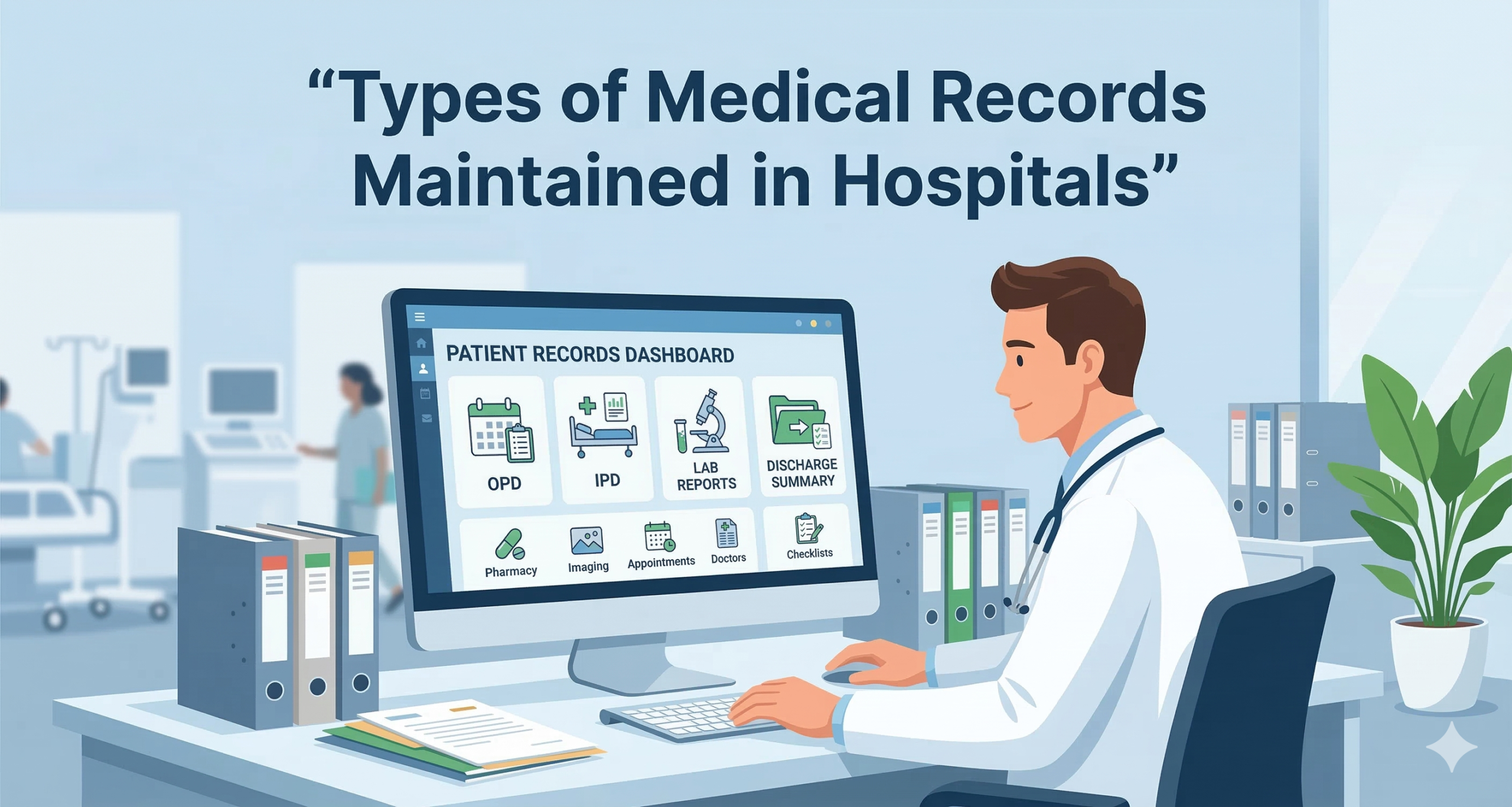
Introduction
Medical records are one of the most important components of any healthcare system.They contain complete information about a patient’s health history, diagnosis, treatment, and outcomes.Proper medical record management helps hospitals provide better patient care, maintain legal documentation, and comply with healthcare regulations such as NABH standards.
Hospitals maintain different types of medical records depending on the patient’s treatment, department, and services provided.These records help doctors, nurses, and hospital staff track patient information accurately and ensure continuity of care.
In this article, we will explain the types of medical records maintained in hospitals, their importance, and how they help improve healthcare services.
What Are Medical Records?
Medical records are documents that contain detailed information about a patient’s medical history, treatment, laboratory reports, and hospital visits.They are maintained by hospitals to ensure proper documentation of patient care.
Medical records may be stored in paper format or electronic format (Electronic Medical Records – EMR / Electronic Health Records – EHR).
Importance of Medical Records in Hospitals
Medical records play a vital role in hospital management.Some important benefits include:
1. Continuity of Patient Care
Doctors can review previous treatment history and provide accurate medical care.
2. Legal Protection
Medical records serve as legal evidence in case of disputes or medico-legal cases.
3. Quality Improvement
Hospitals analyze patient data to improve treatment quality and healthcare services.
4. Insurance and Billing
Medical records support insurance claims and hospital billing processes.
5. Research and Education
Hospitals use medical records for medical research, training, and education.
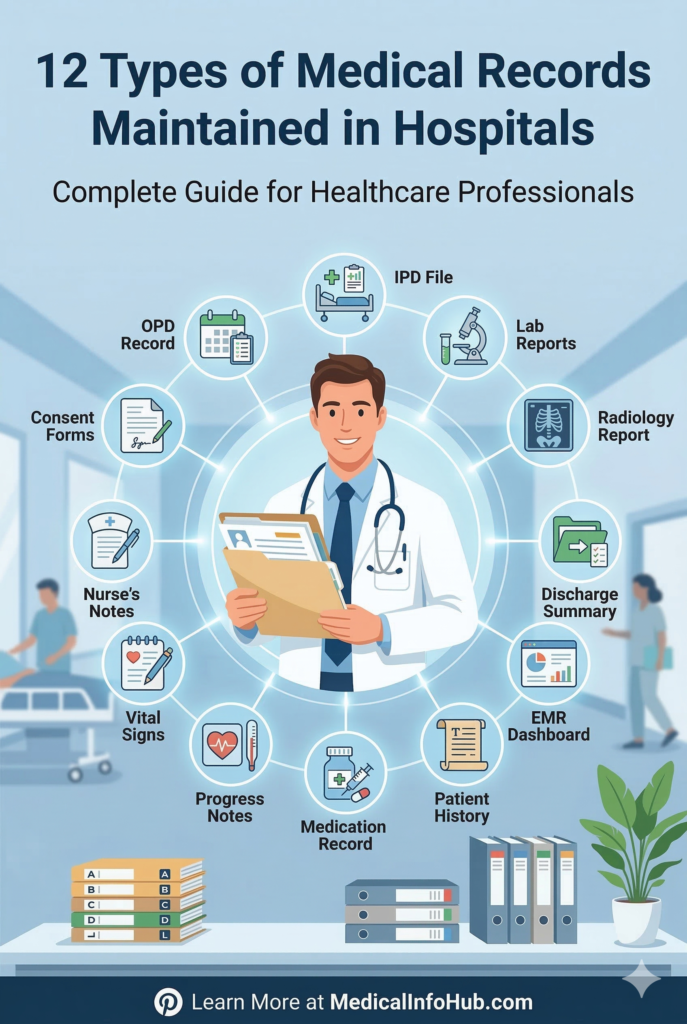
Types of Medical Records Maintained in Hospitals
Hospitals maintain several types of records depending on the patient’s interaction with the healthcare system.Below are the most common types.
1. Outpatient Department (OPD) Records
OPD records are created when a patient visits the hospital for consultation but does not require admission.
Information Included
- Patient registration number
- Patient name, age, gender
- Address and contact details
- Doctor consultation notes
- Diagnosis
- Prescribed medicines
- Laboratory or diagnostic tests
Importance
OPD records help doctors track patient history for follow-up visits and ongoing treatment.
2. Inpatient Department (IPD) Records
IPD records are created when a patient is admitted to the hospital for treatment or surgery.These records are more detailed compared to OPD records.
Information Included
- Admission details
- Patient history
- Physical examination
- Treatment plan
- Daily progress notes
- Nursing notes
- Medication chart
- Laboratory reports
- Discharge summary
Importance
IPD records provide complete documentation of the patient’s hospital stay and treatment.
3. Emergency Department Records
Emergency records are created when patients receive urgent or emergency medical care.
Information Included
- Time of arrival
- Patient condition
- Emergency treatment provided
- Vital signs
- Diagnostic tests
- Doctor observations
Importance
These records help doctors quickly understand the patient’s condition and provide immediate treatment.
4. Laboratory Records
Laboratory records include reports related to diagnostic tests performed in the hospital laboratory.
Common Laboratory Tests
- Blood tests
- Urine tests
- Biochemistry reports
- Microbiology reports
- Pathology reports
Importance
Laboratory records help doctors confirm diagnosis and monitor treatment progress.
5. Radiology and Imaging Records
Radiology records contain imaging reports used for diagnosis.
Examples
- X-ray
- CT scan
- MRI
- Ultrasound
- Mammography
Importance
These records help doctors identify internal injuries, infections, or diseases.
6. Operation Theatre (OT) Records
OT records are maintained for patients undergoing surgical procedures.
Information Included
- Pre-operative diagnosis
- Surgical procedure details
- Surgeon and anesthesia notes
- Operation time
- Post-operative instructions
Importance
OT records are essential for surgical documentation and patient safety.
7. Nursing Records
Nurses play a key role in patient care and maintain detailed nursing records.
Information Included
- Patient vital signs
- Medication administration
- Patient monitoring notes
- Fluid intake and output chart
- Nursing care plan
Importance
These records help ensure continuous patient monitoring and quality nursing care.
8. Pharmacy Records
Pharmacy records track medicines prescribed and dispensed to patients.
Information Included
- Medicine name
- Dosage
- Quantity
- Prescription details
- Pharmacist verification
Importance
Pharmacy records help prevent medication errors and ensure proper drug management.
9. Discharge Summary Records
A discharge summary is prepared when a patient leaves the hospital after treatment.
Information Included
- Admission diagnosis
- Treatment provided
- Surgical procedures
- Laboratory results
- Medication at discharge
- Follow-up instructions
Importance
Discharge summaries help patients and doctors understand the treatment given and future care instructions.
10. Medico-Legal Case (MLC) Records
MLC records are created when a patient case involves legal investigation.
Examples
- Accident cases
- Assault injuries
- Poisoning cases
- Burns cases
- Suicide attempts
Importance
These records are required for legal and police investigations.
11. Birth and Death Records
Hospitals maintain official records of births and deaths.
Birth Records Include
- Baby details
- Date and time of birth
- Parents information
- Birth certificate data
Death Records Include
- Cause of death
- Time and date of death
- Doctor certification
Importance
These records are required for government registration and legal documentation.
12. Electronic Medical Records (EMR/EHR)
Many modern hospitals now use digital systems to store patient records electronically.
Advantages
- Easy access to patient data
- Better record security
- Faster documentation
- Improved hospital efficiency
Importance
Electronic records help hospitals manage large volumes of patient data efficiently.
Best Practices for Medical Records Management
Hospitals must follow proper guidelines for maintaining medical records.
Important practices include:
- Accurate documentation
- Confidentiality and data privacy
- Proper record storage
- Timely record updates
- Compliance with NABH and legal standards
Proper record management ensures better patient care and hospital efficiency.
Conclusion
Medical records are the backbone of hospital operations.They provide essential information about patient health, diagnosis, treatment, and recovery.Hospitals maintain different types of records such as OPD records, IPD records, laboratory reports, nursing notes, pharmacy records, and discharge summaries.
Proper medical record management improves patient safety, supports legal documentation, and enhances healthcare quality.With the increasing use of electronic medical records, hospitals can manage patient information more efficiently and provide better healthcare services.
Frequently Asked Questions (FAQs)
1.What are medical records in hospitals?
Medical records are documents containing patient health information, diagnosis, treatment details, and hospital visit history.
2.Why are medical records important?
They help doctors provide proper treatment, support legal documentation, and improve hospital management.
3.What are the main types of medical records?
Common types include OPD records, IPD records, laboratory reports, radiology reports, OT records, nursing records, and discharge summaries.
4.What is an OPD record?
An OPD record is created when a patient visits a hospital for consultation without being admitted.
5.What is an IPD record?
An IPD record is maintained when a patient is admitted to the hospital for treatment.
6.What is a discharge summary?
A discharge summary is a document prepared when a patient is discharged from the hospital explaining diagnosis, treatment, and follow-up instructions.
7.What are nursing records?
Nursing records contain information about patient care provided by nurses during hospital stay.
8.What are laboratory records?
Laboratory records include reports of diagnostic tests such as blood tests, urine tests, and pathology tests.
9.What is a medico-legal case record?
MLC records are maintained for cases involving legal investigation such as accidents or poisoning.
10.What are electronic medical records?
Electronic Medical Records (EMR) are digital versions of patient medical records stored in hospital computer systems.
11.How long are medical records kept in hospitals?
Retention periods vary but many hospitals keep records for 3 to 10 years depending on regulations.
12.Who maintains medical records in hospitals?
The Medical Records Department (MRD) is responsible for maintaining and managing hospital records.
13.What information is included in medical records?
Medical records include patient details, diagnosis, treatment plans, test reports, and doctor notes.
14.Are medical records confidential?
Yes.Medical records are confidential and can only be accessed by authorized healthcare professionals.
15.How do electronic records improve hospital management?
Electronic records allow faster access to patient data, improve accuracy, and reduce paperwork.